
Which Inspection Records Should Buyers Request for 3PE-Coated Steel Pipe Before Shipment?
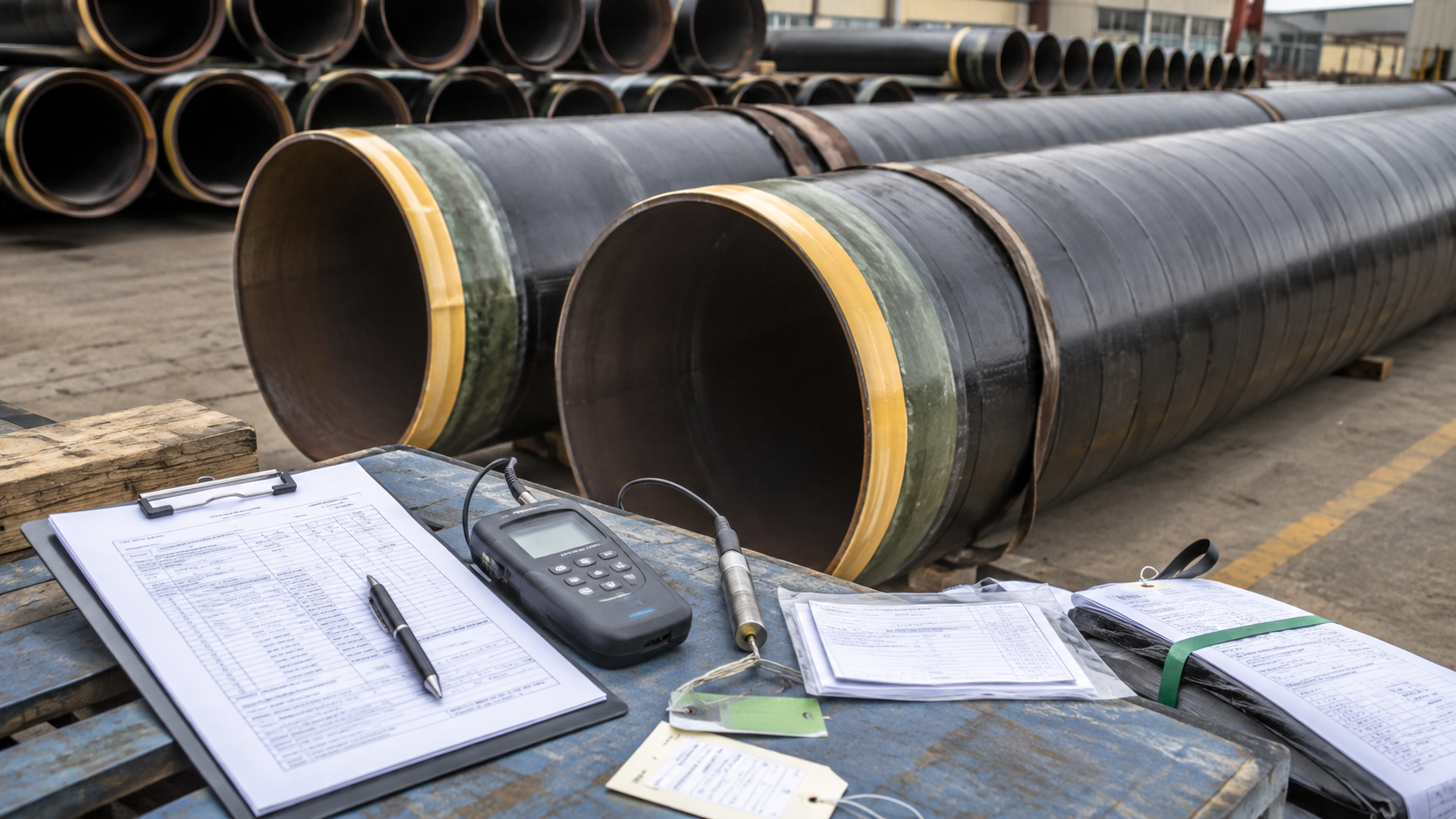
Direct Answer: Before releasing 3PE-coated steel pipe for shipment, buyers should request a traceable dossier that separates base-pipe conformity from coating-system acceptance. The package should connect the purchase order to pipe identification, material records, coating procedure and inspection plan, contracted test results, repair records, handling checks, marking, packing, and final release status for the exact shipment batch.
For overseas engineering procurement, a mill certificate alone does not answer whether a coated-pipe order is ready to ship. It can support the base steel, but coating acceptance is a separate purchasing decision. Maigaotuo / MGTSP supplies international-standard steel products to overseas engineering and trade buyers and supports certificate, inspection-document, processing, customs, and logistics coordination. Buyers reviewing coated pipe can start with the Spiral Steel Pipe with Internal and External Anti-Corrosion Coating page, but the shipment-release dossier should always be defined by the actual purchase order and project specification.
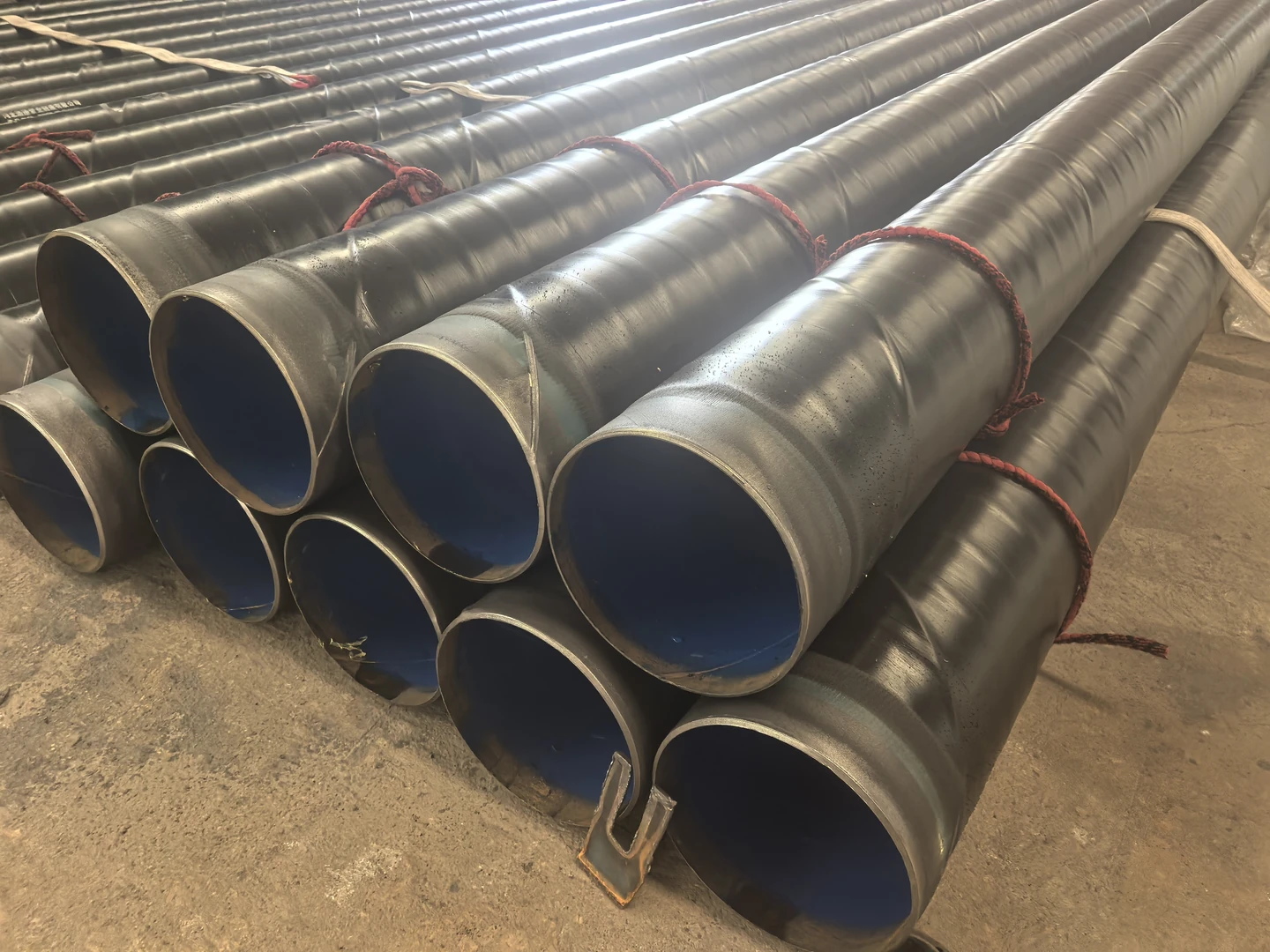
Why Should Buyers Separate Base-Pipe Records From Coating Records?
The base pipe and the corrosion-protection system answer different acceptance questions. A base-pipe document may identify the steel grade, heat, dimensions, and material test results required by the order. It does not automatically prove that the coating was applied, inspected, repaired, handled, and released according to the project’s coating requirements.
This distinction matters because buyers can receive a complete-looking document package that is still incomplete for the coated product. A practical review should divide evidence into two linked groups: records that establish what the steel pipe is, and records that establish what happened to the coating system after the pipe entered the coating process.
| Evidence Group | Typical Buyer Check | Why It Matters |
|---|---|---|
| Purchase-order basis | Project specification, pipe standard/edition, grade, dimensions, coating requirement, inspection scope | Defines what every later document must be checked against. |
| Base-pipe identity | Heat/pipe identification, material certificate, dimensions, required base-pipe inspection records | Confirms the steel pipe supplied is traceable to the ordered material. |
| Coating material evidence | Order-specific coating material certificates or supplier records where required | Separates coating-material evidence from the base steel certificate. |
| Coating-process evidence | Approved procedure, production batch references, process and inspection records required by the contract | Shows how coating acceptance was controlled during production. |
| Coating inspection | Thickness, discontinuity/holiday, bond/adhesion, visual, cutback, or other contracted test records | Provides shipment-specific evidence instead of relying on a general product claim. |
| Repair and handling | Damage identification, repair records, reinspection, end protection, handling checks | Prevents repaired or damaged areas from disappearing from the release history. |
| Shipment release | Marking, packing list, traceability list, inspection release, dossier index | Links accepted pipes to the physical shipment. |
What Should the Purchase Order Define Before Inspection Records Are Reviewed?
Inspection documents only have value when the buyer knows which requirement they are supposed to prove. Before reviewing test reports, confirm the order basis. At minimum, the purchasing team should be able to identify the governing pipe specification, grade, ordered OD, wall thickness, length, coating basis, service environment, required cutback or end condition, inspection frequency, witness or hold points, repair-reporting rules, and document format.
Do not compare a report against a generic internet value when the contract contains a different requirement. The release decision should be tied to the purchase order, approved technical documents, and project specification. If a requirement is not written into the order, the supplier and buyer may interpret acceptance differently after production has already started.
For buyers consolidating multiple steel items under one procurement package, the Steel Pipes category can help identify the relevant product family, while the RFQ should still define the coated-pipe requirements separately.
What Should Buyers Look for in the Coating Inspection and Test Plan?
An Inspection and Test Plan, or ITP, is useful because it turns the purchase specification into a sequence of production and inspection checkpoints. The exact format is project-specific, but a buyer should be able to see what is checked, when it is checked, how often it is checked, which record is produced, and whether any activity requires buyer or third-party witnessing.
A practical ITP review asks:
- Does the document reference the correct purchase order and coating requirement?
- Are inspection stages tied to identifiable production or coating batches?
- Are test frequencies defined rather than left as vague statements?
- Are witness and hold points clearly marked where the contract requires them?
- Is there a defined action for nonconforming coating or handling damage?
- Does the ITP identify which records become part of the final shipment dossier?
- Can the final records be traced back to the individual pipe, heat, lot, or coating batch required by the project?
The point is not to demand the same ITP for every order. It is to make sure the inspection plan follows the actual project basis and creates the records needed for release.
Which Coating Test Records Matter Before Shipment?
The required tests depend on the purchase specification, coating system, service condition, and inspection plan. Buyers should therefore request the records required by the contract rather than apply one universal acceptance value. For many coated-pipe projects, the review may include records for coating thickness, discontinuity or holiday testing, bond or adhesion-related checks, visual inspection, cutback condition, and any other order-specific tests.
| Record | Buyer Verification | Common Procurement Mistake |
|---|---|---|
| Coating thickness record | Check pipe/batch identity, measurement basis, frequency, and acceptance against the order | Accepting a generic nominal coating claim with no shipment traceability. |
| Holiday/discontinuity test record | Confirm the test was required, performed for the correct batch, and evaluated to the contracted basis | Using a test sheet that does not identify the shipped pipes or production lot. |
| Bond/adhesion-related record | Confirm method, frequency, batch identity, and the order-specific acceptance basis | Assuming one test method or acceptance value applies to every project. |
| Visual inspection | Review coating condition, ends, cutbacks, visible damage, contamination, and repair areas | Treating visual checks as informal observations with no release record. |
| Other contracted tests | Verify the report is explicitly required by the project specification or approved ITP | Requesting impressive but irrelevant reports while missing mandatory order requirements. |
Buyers should also check that test dates and batch identifiers make chronological sense. A report should fit the production sequence rather than appear as an isolated document with no connection to the coated pipes being shipped.
How Should Repair Records Be Reviewed?
Coating repair is not automatically a reason to reject a batch, but the buyer should know where repair occurred, why it occurred, whether the repair method was permitted by the order, and how the repaired area was reinspected. A shipment dossier that contains only passing final test sheets but no explanation of known repair areas can hide an important part of the quality history.
A useful repair record should allow the buyer to answer:
- Which pipe or coating batch was affected?
- Where was the damage or nonconformity located?
- Was the cause production-related, handling-related, or found during inspection?
- What repair method was used under the approved procedure?
- Was the repaired area reinspected using the required method?
- Is the repaired pipe still traceable to the final packing and shipment list?
Repair limits and reporting expectations should be written into the RFQ or inspection plan. Otherwise, the buyer may discover after shipment that the supplier and project team had different definitions of what needed to be reported.
Why Do Handling and End Protection Need Their Own Release Checks?
A coating can pass production inspection and still be damaged during lifting, storage, loading, or transport preparation. For that reason, shipment release should not stop at the coating line. Buyers should verify that handling and packing controls are consistent with the project requirements and that visible damage identified before loading is recorded and resolved.
Useful evidence can include final visual release records, end-protection checks, pipe marking lists, packing lists, loading or handling records where required, and photographs when they are part of the agreed dossier. The purpose is not to create paperwork for its own sake. The purpose is to preserve traceability from accepted production through physical shipment.
How Should Heat, Pipe, Coating-Batch, and Packing Traceability Connect?
Traceability fails when each document looks correct individually but the buyer cannot connect them. A robust dossier should allow the purchasing or inspection team to follow the product from the purchase order to the base material, coated pipe, inspection record, repair history, and packing list.
| Traceability Level | Buyer Should Be Able to Connect |
|---|---|
| Order | Purchase order, project specification, approved technical basis |
| Base pipe | Pipe ID or batch, heat number where required, material certificate, dimensional/inspection records |
| Coating production | Coating batch or production reference, procedure, ITP, material records where required |
| Inspection | Test record to the pipe, lot, or coating batch defined by the inspection plan |
| Repair | Damage/repair location, repair record, reinspection result |
| Shipment | Pipe marking, packing list, released quantity, dossier index |
When the project involves mixed standards or multiple steel items, documentation coordination can become as important as sourcing. MGTSP’s One-Stop Steel Services article provides additional context on overseas procurement coordination.
Scenario: What Happens When the MTC Is Complete but the Coating Dossier Is Not?
Representative scenario — not a claimed customer case.
Business Background: An overseas project buyer is preparing to release a batch of coated spiral steel pipe. The supplier sends the packing list, base-pipe material certificates, and a general coating report shortly before shipment.
Problem: The MTCs are complete, but the buyer cannot connect the coating test sheet to the specific shipped pipes. Repair activity mentioned during inspection is not included in the dossier, and final marking has not been reconciled with the packing list.
Cause: The RFQ defined the base-pipe documentation clearly but did not define the coating inspection dossier, repair reporting, or final traceability format.
Solution: The buyer holds shipment release until the supplier provides the order-specific coating inspection records, links them to the correct production or coating batch, adds repair and reinspection evidence, and reconciles pipe marking with the packing list.
Buyer Decision Value: The buyer avoids treating a valid base-pipe MTC as proof of coating acceptance and creates a repeatable release process for later batches.
What Should the Pre-Shipment Release Checklist Contain?
| Release Check | Buyer Action | Status |
|---|---|---|
| Order basis | Confirm standards/editions, grade, dimensions, coating requirement, inspection scope, and document format | Pass / Hold |
| Base-pipe records | Confirm required material and dimensional records are traceable to the shipment | Pass / Hold |
| Coating procedure and ITP | Confirm approved basis and required inspection points | Pass / Hold |
| Coating test records | Review all contracted tests, frequencies, identities, and acceptance references | Pass / Hold |
| Repair records | Check damage, repair method, reinspection, and traceability | Pass / Hold |
| Final visual / handling | Check coating condition, ends, marking, and packing preparation | Pass / Hold |
| Document reconciliation | Reconcile pipe IDs/batches with packing list and dossier index | Pass / Hold |
| Release authorization | Record who accepted the shipment and which open items remain | Release / Hold |
For buyers that need project references or broader supply examples before placing an order, MGTSP also maintains a Case section for overseas steel supply projects.
What Information Should Buyers Put in the RFQ?
To receive a useful coated-pipe offer and document package, provide the pipe route or manufacturing requirement, governing standard and edition, steel grade, OD, wall thickness, length, service environment, coating basis, coating class or thickness requirement where specified by the project, cutback requirements, inspection frequency, witness/hold points, repair limits, marking, packing, and required dossier format.
Do not ask the supplier to confirm a universal coating thickness, test voltage, or acceptance value without giving the project basis. Those values must come from the order or governing specification. If third-party inspection is required, state the inspection scope and witness points rather than assuming it is included automatically.
Frequently Asked Questions
Is a material test certificate enough to release 3PE-coated steel pipe?
No. An MTC can support the base-pipe material, but coating acceptance needs its own order-specific evidence. Buyers should review coating procedure, inspection records, repair history, traceability, and final release documents required by the contract.
Should buyers always request a holiday test record?
Request it when the governing specification, purchase order, or approved inspection plan requires it. The test method, frequency, and acceptance basis should come from the project requirements rather than a universal value.
What is the most common documentation mistake?
A common mistake is receiving many documents that are not traceable to the shipped batch. A smaller set of order-specific, reconciled records is more useful than generic certificates that cannot be linked to the physical pipes.
How should coating repairs be documented?
The record should identify the affected pipe or batch, the repair location or reason, the approved repair method, and the reinspection result required by the order.
Should buyers request coating material certificates?
Where the project specification or purchase order requires them, yes. They should be treated separately from the base-pipe material certificate and linked to the relevant coating production batch.
What should be checked immediately before loading?
Confirm final coating condition, unresolved repairs, pipe marking, end protection, packing list reconciliation, and the completeness of the shipment dossier required for release.
Can MGTSP confirm inspection documents for a specific order?
MGTSP can review the requested steel specification, certificate and inspection-document requirements as part of procurement communication. The exact documents, tests, and acceptance basis should be confirmed against the specific purchase order and project requirements.
Prepare the Inspection Dossier Before Shipment Release
When requesting a coated-pipe quotation, send the project specification, pipe grade and dimensions, coating requirements, inspection/test plan expectations, witness points, repair-reporting rules, marking, packing, and dossier format. Use the Contact Us page to provide the RFQ package. MGTSP can help coordinate product specification, certificate and inspection-document requirements, processing, and export delivery information for the order, while final acceptance remains tied to the agreed project basis.