
What Should Buyers Ask a 316 Stainless Steel Angle Bar Manufacturer Before an RFQ?
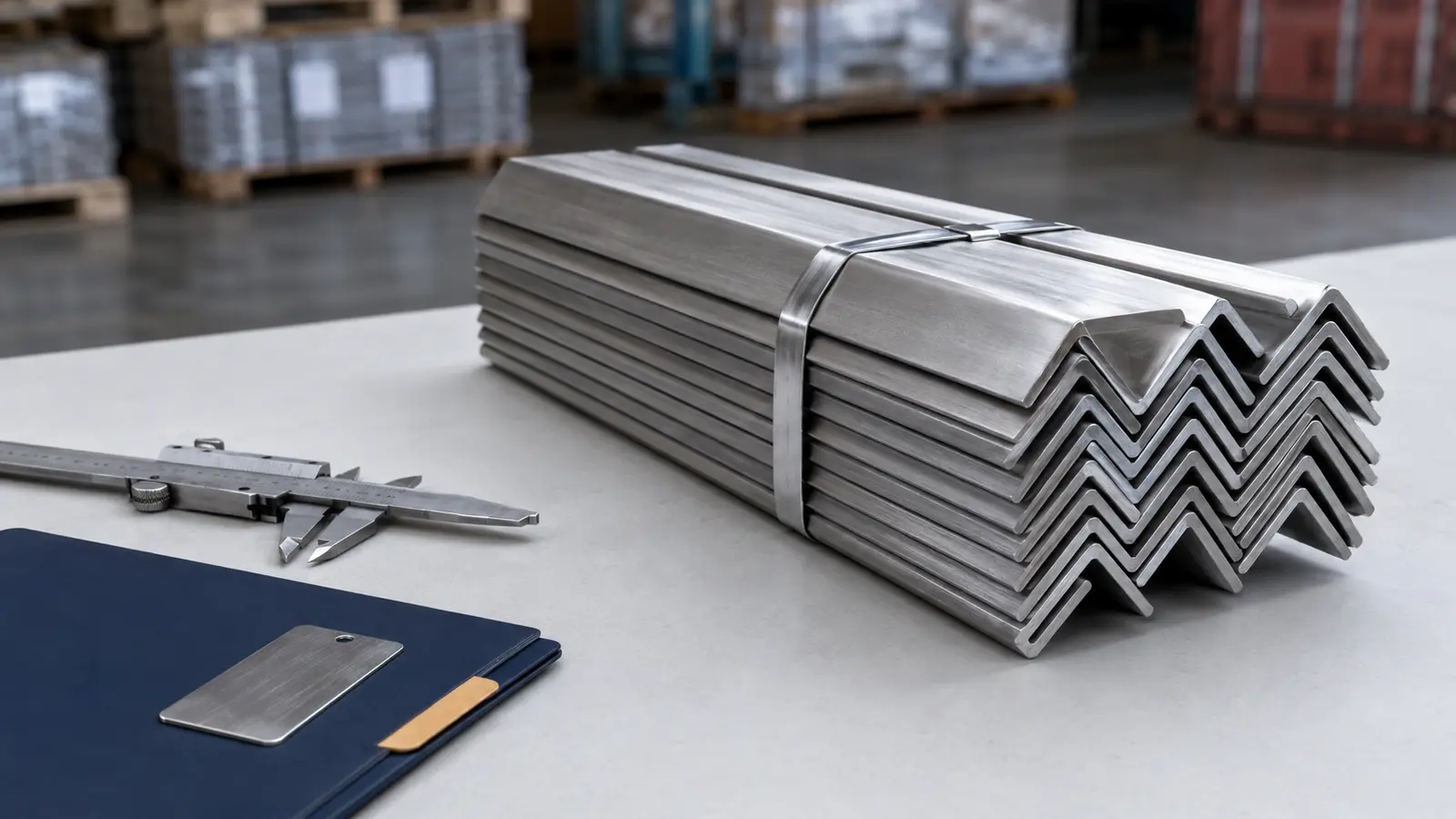
Direct Answer: A buyer should qualify both the company issuing the quotation and the mill producing the 316 stainless steel angle bar. Confirm the required standard, grade designation, equal or unequal legs, thickness, length, tolerances, surface condition, heat traceability, inspection documents, processing scope, packaging, and delivery responsibility. A supplier profile is useful for screening, but it does not replace order-specific evidence.
The distinction between mill and supplier matters in international purchasing. A mill may manufacture the bar, while a steel supplier coordinates sourcing, cutting, certification, export documents, and shipment. Either route can work. The risk appears when the RFQ leaves responsibility unclear and the buyer assumes that every certificate, tolerance, or service is included.
First Ask Who Is Responsible for the Material
The phrase “316 stainless steel angle bar manufacturer” can refer to the producing mill, an export supplier working with mills, or a company that combines stock, processing, and trade services. Procurement should identify the contracting party, the producing source, and the party responsible for resolving a nonconformance.
Maigaotuo’s customer profile positions the company as an international-standard steel supplier and trade service provider that integrates mill resources. It should not be described as the rolling mill without separate evidence. For a buyer, the useful question is not whether a company uses the word manufacturer. It is whether the quotation identifies the actual supply route and provides documents that connect the delivered angle to the agreed source and specification.
One practical warning sign is a quotation that names a grade but leaves the manufacturing source and certificate type blank. That omission may not indicate unsuitable material, but it prevents the buyer from knowing what evidence will arrive with the shipment.
Freeze the Standard Before Comparing 316 Angle Quotations
“316” alone is not a complete order description. The project may require a particular national or international material standard, a specific grade form, or an approved equivalent. The RFQ should name the controlling standard and edition where the contract requires one. If alternatives are acceptable, ask suppliers to state the proposed equivalent and document the comparison rather than substitute silently.
Maigaotuo’s broader supply profile covers EN, ASTM, GOST, JIS, AS, and BS requirements. That range does not prove that every angle size is available under every standard. Availability, dimensional series, tolerance, certificate content, and producing mill still need confirmation for the offered item.
The related article on foreign-standard steel procurement gives wider context on compliance-focused sourcing. The angle-bar RFQ should then identify the exact project rule rather than repeat a general request for “international standard” material.
Dimensions Need More Than a Nominal Size
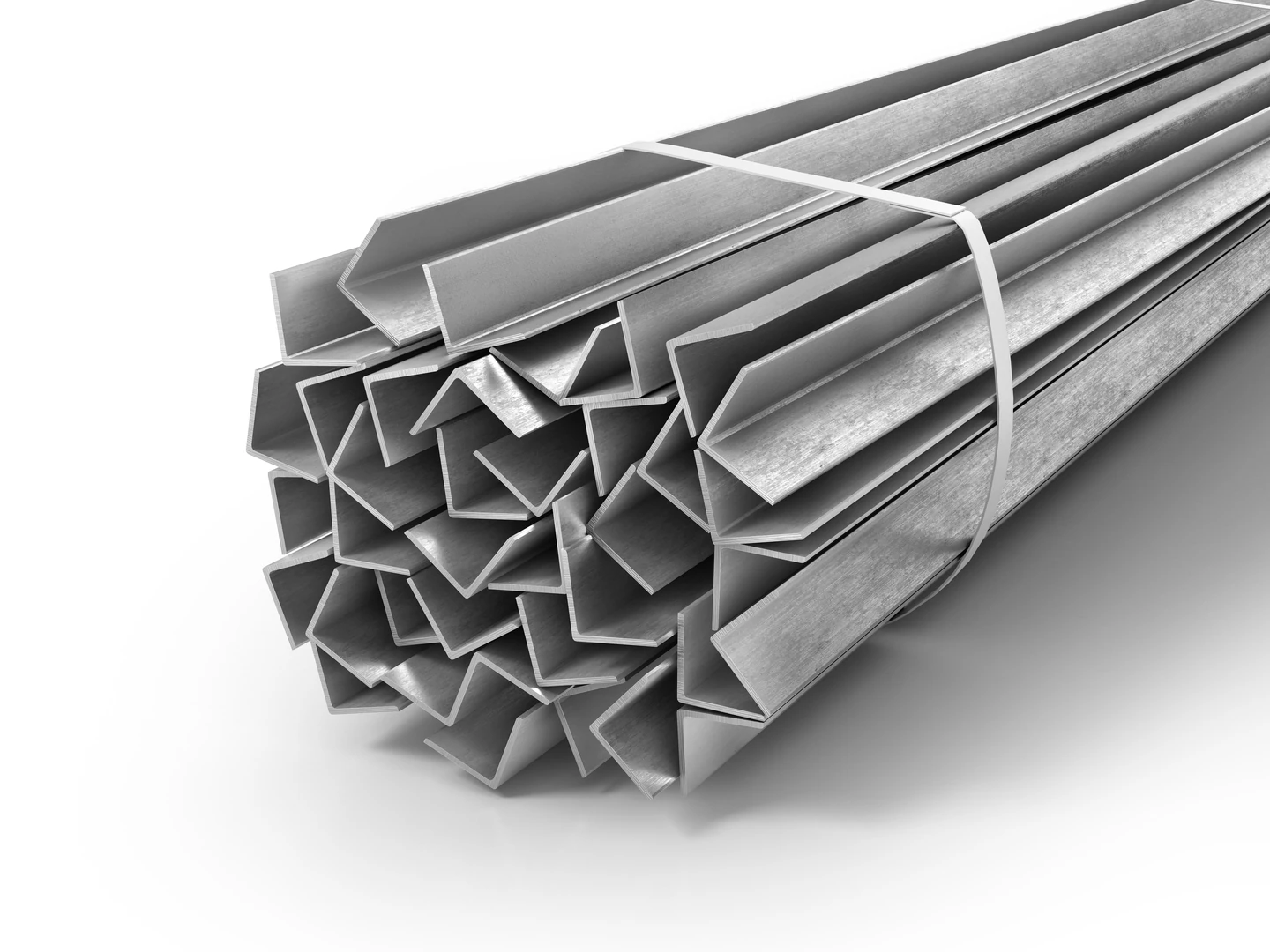
An angle description should state whether the legs are equal or unequal, the leg dimensions, thickness, required length, quantity, and dimensional tolerances. Drawings should show the orientation if the part will be cut, drilled, slotted, or incorporated into a fabricated assembly.
The stainless steel angle bar product record describes a one-piece L-shaped section used for frames, supports, brackets, and structural reinforcement. The page data also refers to a 90-degree rolled form and 304/316 options. It does not provide the project-specific leg sizes, thickness range, tolerances, surface, length, or load design needed for the present inquiry.
A common mismatch occurs when two suppliers interpret the same short notation differently. One may quote a standard stock length and another a finished cut length; one may apply a standard dimensional tolerance while another prices a tighter fabrication requirement. Writing the fields separately prevents an apparently lower offer from becoming an extra cutting or sorting task after arrival.
Which Supplier Claims Need Supporting Evidence?
| Supplier statement | Buyer should request | Evidence to review | Risk if unresolved |
|---|---|---|---|
| “316 material” | Exact grade designation, controlling standard, and permitted equivalence | Material certificate linked to heat or lot identification | Material name cannot be traced to the delivered bars |
| “Standard size” | Leg dimensions, thickness, length, tolerance, and equal or unequal form | Quotation line, dimensional table, and inspection result | Bars fit the catalog description but not the fabrication drawing |
| “Good surface” | Required finish, visible-face criteria, and defect acceptance | Approved sample or agreed visual standard | Cosmetic expectations are judged only after delivery |
| “Full certification” | Certificate type, issuer, traceability fields, and any third-party inspection | Redacted example before order and order-specific final documents | The received document lacks the project-required fields |
| “Custom processing” | Cutting, holes, slots, deburring, marking, and dimensional responsibility | Approved drawing and first-piece inspection record | Processing scope is priced differently by each supplier |
| “Export packing” | Bundle size, separators, edge protection, marks, and corrosion precautions | Packing specification and shipment photographs | Handling or storage needs are left to the buyer |
A certificate sample is useful only if the final document can be tied to the supplied material. Generic certificates downloaded during supplier screening should not be treated as shipment traceability.
Processing Capability Must Match the Drawing
Cutting angle bar to length is different from delivering finished brackets. The RFQ should separate raw material supply from sawing, drilling, punching, slotting, beveling, deburring, surface treatment, marking, and assembly. Each operation needs a drawing reference and an acceptance owner.
Hole position can be more important than the bar’s nominal leg size when the angle joins a frame. If a fabricator drills after delivery, the buyer should confirm material allowance, straightness, and clamping requirements. If the supplier processes the part, the buyer should define datum points, hole sizes, tolerances, burr limits, and the first-piece approval process.
Procurement teams sometimes ask for a processed sample but fail to freeze its drawing revision. The sample passes, production follows a later drawing, and the original approval record no longer controls anything. Drawing number and revision should appear on the quotation, sample report, purchase order, and packing identification.
Inspection Should Follow the Actual Failure Risk
Inspection is most useful when it targets how the angle will be used. A decorative frame may prioritize visible surface and clean edges. A welded support may place more emphasis on section dimensions, straightness, material identity, and fabrication fit. The project engineer should define structural design requirements; the supplier should not be expected to infer them from quantity and grade alone.
Typical buyer-controlled checks may include material-document review, heat or lot identification, dimensional sampling, straightness, angle geometry, surface condition, quantity, processed features, and package marks. Additional testing or independent inspection should be specified only when the contract or risk assessment requires it.
Sample approval does not prove that the bulk shipment is traceable. Bars can be cut into shorter pieces, mixed during processing, or bundled after inspection. The identification plan must survive those steps, especially when several grades or sizes share similar appearances.
Commercial Scope Is Part of Supplier Qualification
Two technically acceptable offers may cover different work. Compare whether the price includes mill-length or cut-length supply, processing, inspection, documents, packing, inland movement, export clearance, ocean booking, and the agreed delivery point. Maigaotuo’s profile supports processing, certificates, customs, and logistics coordination, but every included service still needs to appear in the quotation.
Buyers reviewing the wider stainless steel sections range should avoid combining angle, channel, flat bar, and other sections under one undefined commercial line. Each section can have a different size basis, processing route, package form, and inspection method.
A lower material price may remain the better choice when the buyer can process and inspect locally. A more inclusive offer may reduce coordination when multiple sizes require export packing and documentation. The decision should compare the complete delivered scope, not assign value to the supplier label alone.
A Supplier-Qualification Scenario Before RFQ
Representative scenario — not a claimed customer case. A steel-structure fabricator needs 316 angle for brackets used in an overseas project. Its first inquiry lists only grade, one nominal size, and total weight. One supplier assumes stock lengths with mill certification; another includes cut lengths and basic processing but uses a different dimensional standard.
The buyer separates the requirement into material standard, equal-angle dimensions, thickness, finished length, drawing revision, hole pattern, surface acceptance, certificate fields, bundle identification, and delivery scope. Both companies must identify the producing source and the party responsible for final inspection. The revised offers are higher in detail, not necessarily higher in price.
Supplier qualification now answers a commercial question the original inquiry could not: which offer provides the required bar and evidence with the least unresolved work for the buyer’s factory and project team.
What Belongs in the Final RFQ?
- Project application and the engineer-approved material and dimensional standards.
- Exact 316 grade designation or permitted alternative, including any low-carbon requirement.
- Equal or unequal angle, leg dimensions, thickness, length, quantity, and tolerances.
- Surface condition, visible-face expectations, permissible defects, and protective requirements.
- Cutting and fabrication drawings, revision, datums, holes, slots, edges, and first-piece approval.
- Certificate type, heat or lot traceability, inspection items, records, and third-party hold points.
- Bundle, marks, packing, corrosion precautions, delivery basis, and document schedule.
- Producing source, contracting supplier, and responsibility for nonconforming material.
Ask suppliers to mark deviations rather than hide them inside notes. An alternative can be commercially useful, but it should remain separate from a compliant base offer so the project team can approve it deliberately.
Questions Buyers Ask During Supplier Screening
Must the contracting supplier also be the producing mill?
No. An export steel supplier can coordinate mills, processing, certificates, and logistics. The buyer should know who produced the material, who issues the quotation, how traceability is maintained, and who resolves a quality claim.
Is “316 stainless steel angle” a complete RFQ description?
No. The description still needs a controlling standard, exact grade form, equal or unequal legs, dimensions, thickness, length, tolerance, surface, quantity, documents, and processing scope.
What certificate should buyers request?
The required certificate depends on the contract and governing standard. State the certificate type and required traceability fields in the RFQ, review an example during qualification, and connect the final document to the delivered heat or lot.
Should buyers approve a sample before a bulk angle order?
A sample or first piece is useful when cutting, drilling, surface appearance, or special marking is involved. Bulk acceptance must still verify that production follows the approved drawing and that identification remains linked to the shipment.
How can buyers compare angle-bar quotations fairly?
Normalize each offer against the same standard, grade, dimensions, finished length, processing, inspection, documents, packing, and delivery point. Record every deviation separately. A unit price has little comparative value when one supplier quotes mill lengths and another quotes finished, inspected parts.
When is third-party inspection worth considering?
Third-party inspection may be useful when the project contract requires it, the order has critical traceability or fabrication risks, or the buyer cannot attend the agreed hold points. The scope, sampling basis, acceptance criteria, and document linkage should be fixed before the purchase order.
Prepare a supplier and RFQ review with complete inputs. Send the material standard, grade, angle dimensions, lengths, quantity, drawings, processing, certificate, inspection, packing, and delivery requirements through the Maigaotuo contact page. The review can then address sourcing and service scope without assuming that the contracting supplier and producing mill are the same company.