
Foreign Standard Steel Procurement Enters a More Specialized Stage
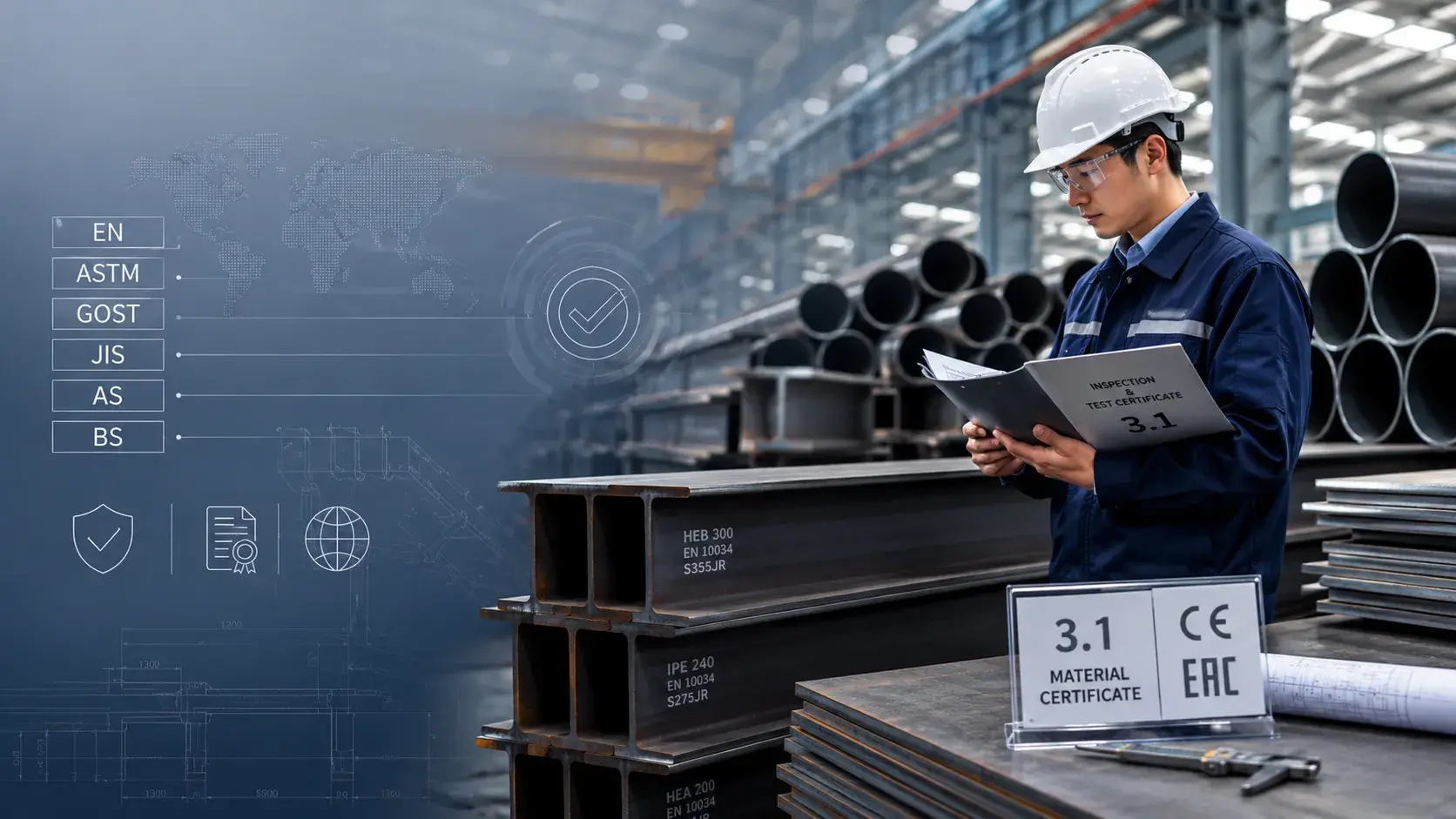
In recent years, as international engineering projects have placed higher requirements on quality control and compliance acceptance, overseas steel procurement has moved beyond simple price comparison. Buyers now evaluate suppliers based on standards, certificates, material grades, processing capabilities, and delivery reliability. For overseas EPC contractors, steel structure manufacturers, traders, and equipment manufacturers, sourcing steel that complies with local engineering standards has become a key factor in ensuring smooth project delivery.
Foreign standard steel products usually involve multiple systems, including EN, ASTM, GOST, JIS, AS, and BS standards. These standards differ in dimensions, chemical composition, yield strength, tensile strength, impact performance, testing methods, and certification requirements. Without sufficient technical expertise, suppliers may cause inaccurate material substitution, misunderstanding of drawing requirements, or incomplete acceptance documents.
As a result, steel suppliers with international technical support capabilities are gaining more attention from overseas clients. Such companies not only supply H beams, I beams, channels, angles, steel plates, steel pipes, round bars, rebar, flanges, and other products, but also provide material comparison, standard interpretation, specification selection, and certificate support based on clients’ drawings, project standards, and inspection requirements.
From a supply chain perspective, stable direct supply channels from steel mills and regular spot inventory have also become important factors affecting international procurement efficiency. For overseas projects with tight construction schedules, the supplier’s ability to quickly match specifications, complete cutting, bending, hot-dip galvanizing, beveling, customs clearance, shipping booking, and cross-border logistics directly affects the material delivery schedule.
Industry analysis suggests that the foreign standard steel market is upgrading from product supply to technical supply chain services. In the future, steel service providers with strong standard knowledge, certificate management, processing support, and global delivery capabilities will become important partners in overseas engineering procurement.