
One-Stop Steel Services Improve Efficiency for Overseas Engineering Procurement
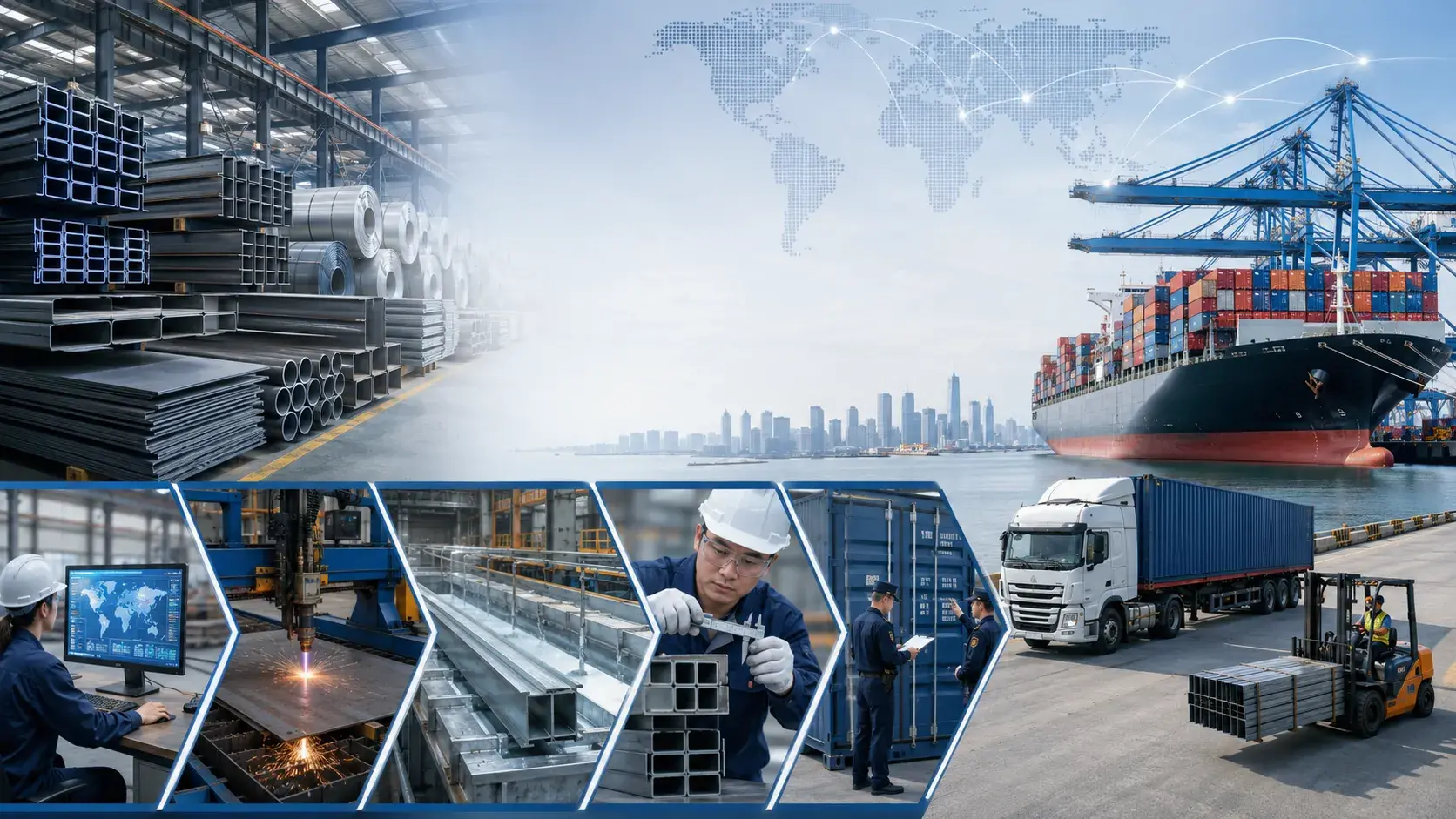
With the rapid development of international engineering construction and cross-border trade, overseas clients are placing higher demands on steel suppliers. In addition to product pricing, customers now pay closer attention to standard compatibility, inventory availability, processing capacity, complete certification, customs clearance efficiency, and logistics stability. The one-stop steel service model is becoming an important trend in international standard steel procurement.
Traditional steel procurement often requires customers to coordinate separately with steel mills, processing plants, testing agencies, freight forwarders, customs brokers, and shipping companies. This creates high communication costs, complex process coordination, and potential risks of delayed delivery or missing documents. By contrast, one-stop steel service providers integrate product supply, technical support, customized processing, quality inspection, export customs clearance, and ocean freight booking, offering clients a more efficient procurement solution.
In terms of products, these service providers usually cover multiple standard systems, including European, American, Russian, Japanese, Australian, and British standards. Their product range includes structural sections, plates, pipes, bars, rebar, flanges, and other steel products, supporting overseas infrastructure, steel structures, machinery manufacturing, pipeline engineering, energy construction, and other project needs. In terms of materials, mainstream international grades such as S275, S355, A36, A572, 09G2S, and C245 can meet common steel requirements for engineering projects in different regions.
In terms of service, professional technical teams can assist customers with material comparison, standard interpretation, and drawing-based material selection, reducing procurement errors caused by differences between standards. At the same time, value-added processing services such as cutting, bending, hot-dip galvanizing, and beveling can further improve on-site material application efficiency. Documents such as original 3.1 material certificates, CE, EAC, and inspection reports also provide important support for project acceptance and quality traceability.
As demand for standardized engineering materials continues to grow across Europe, Central Asia, Russia, Southeast Asia, the Middle East, the Americas, and Australia, international steel suppliers with global service capabilities are expected to gain broader development opportunities. In the future, comprehensive service capabilities centered on standard compliance, stable inventory, and timely delivery will become key factors for foreign standard steel companies competing in the international market.