
What Should Buyers Check Before Specifying a 316 Stainless Steel Pipe Elbow?
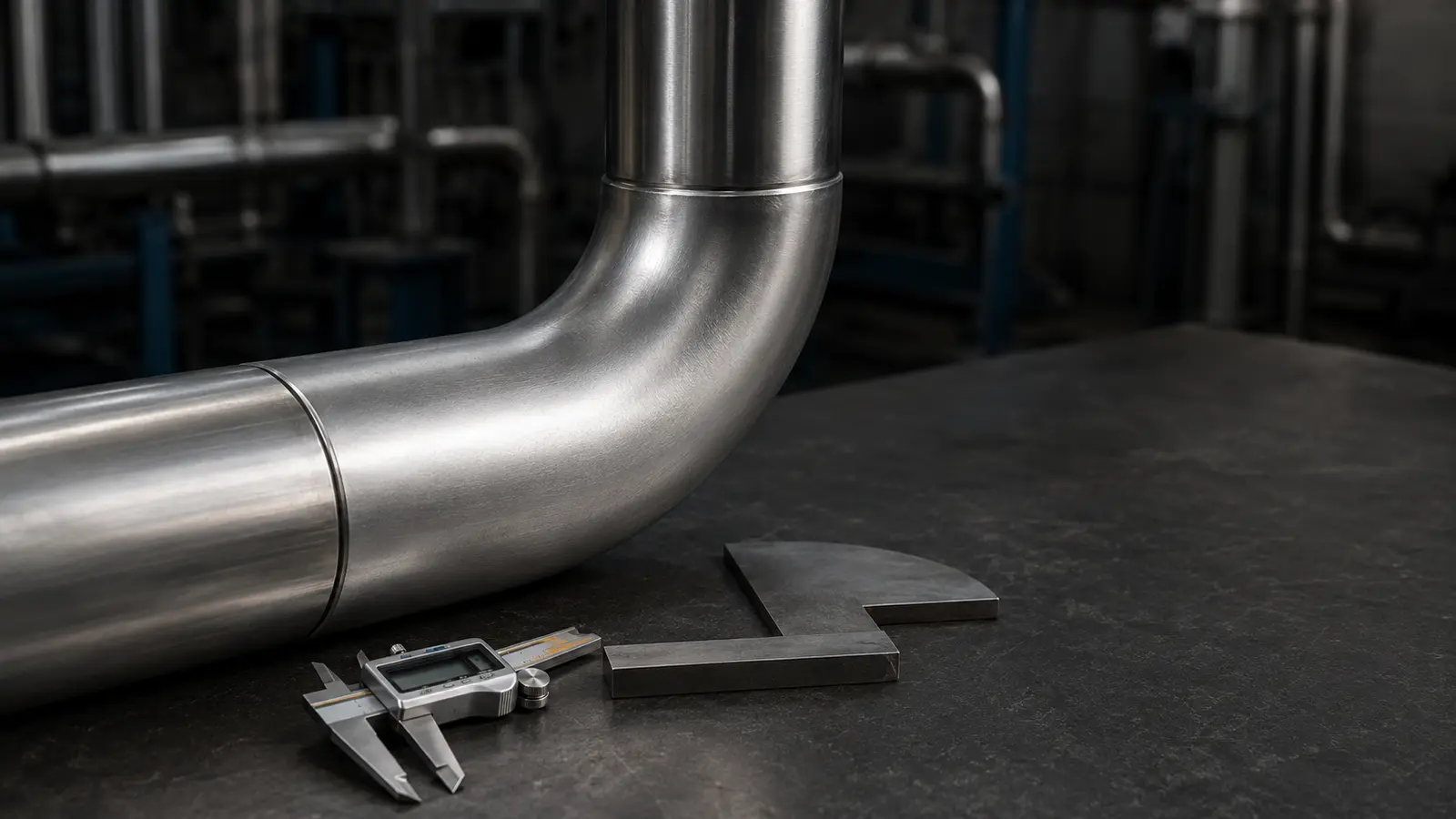
Direct Answer: A 316 stainless steel pipe elbow should be specified as part of a piping system, not by material and angle alone. Buyers need the exact grade, material and dimensional standards, nominal size, wall or schedule, bend angle, radius, connection and end preparation, service conditions, inspection, traceability, and documentation. Every field must match the adjoining pipe and project design before approval.
Many elbow problems are specification problems rather than visible product defects. A fitting can be correctly manufactured yet still fail installation because its center-to-end dimension, wall series, bevel, radius, or standard does not match the pipe spool. Procurement should therefore begin with the line specification and drawing, then select a product and supplier.
Start With the Line, Not the Elbow Catalog
The line list or piping specification should identify the transported medium, design conditions, corrosion allowance if any, material class, joining method, inspection level, and applicable project standards. The engineer responsible for the system must define those inputs. A supplier can propose a fitting only after the operating and interface conditions are clear.
Maigaotuo’s pipe elbow category groups candidate fittings, while its broader industrial pipe fittings range includes elbows, flanges, tees, reducers, and bends. Category membership does not establish compatibility among the components. The RFQ must connect each elbow to a specific line item.
A frequent shortcut is to copy a previous purchase description into a new project. That can preserve the angle and nominal size while missing a different wall, standard, service medium, or document requirement. Reuse is safe only after every field is checked against the current line specification.
“316” Needs an Exact Grade and Standard
The buyer should state the exact 316-family grade required by the project and whether an alternative or dual-certified material is acceptable. “316” and “316L” should not be treated as interchangeable by default; the approved material specification and engineering requirements control the choice.
Material and dimensional standards serve different purposes. The RFQ should name both where the project requires them, together with the applicable edition or project supplement. If suppliers offer an equivalent standard, ask for a separate deviation statement and technical comparison rather than allowing the quotation to overwrite the original requirement.
Material identification must continue beyond the certificate. Heat or lot markings, package labels, and the final material record should correspond. If markings will be removed during site fabrication, the buyer needs a transfer method that preserves traceability without creating unverified re-marking.
Angle, Radius, and Center-to-End Dimensions Control the Layout
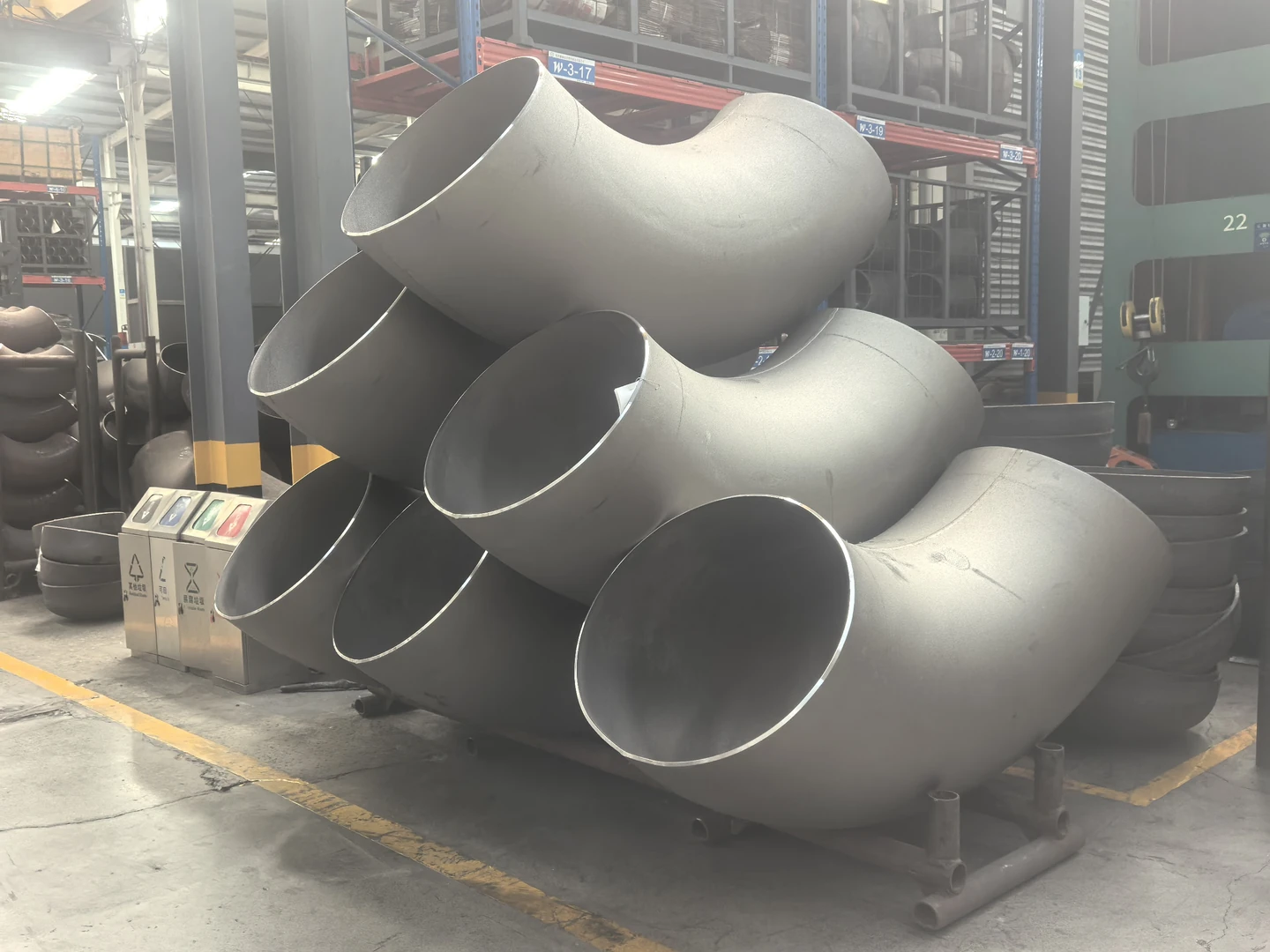
A 45-degree elbow and a 90-degree elbow change the line differently. Long-radius and short-radius fittings can also occupy different space and affect the path through a congested skid or plant room. Procurement should not select radius from a familiar product photograph; it must follow the approved piping layout and dimensional standard.
Center-to-end dimensions deserve an explicit check when an elbow enters a prefabricated spool. A small difference can shift a flange face, support point, or equipment nozzle connection. The fabrication drawing should state the controlling dimensions and clarify whether the supplier provides a standard elbow or a finished spool component.
The target stainless steel elbow product record describes a hot-formed smooth curvature and lists chemical, seawater, ventilation, food, and pharmaceutical piping among its applications. The available data does not confirm the exact 316 grade, angle, radius series, size, wall, pressure class, standard, or end preparation for a quoted fitting.
Wall Thickness Must Match the Adjoining Pipe
Nominal size alone does not define the bore or outside-wall relationship. The RFQ should state the required wall series or exact thickness and identify the adjoining pipe specification. A mismatch can create an internal step, poor fit-up, welding difficulty, or an unacceptable transition in the finished line.
Hot forming can change geometry through the bend, so the acceptance plan should address the dimensions and wall characteristics required by the governing standard and project specification. The buyer should not invent a minimum value during inspection; the contract must establish it before production.
When corrosion allowance or post-fabrication machining is relevant, clarify how it affects the ordered wall. When no such requirement exists, avoid adding generic thickness margins that increase cost without engineering approval.
Connection and End Preparation Are Interface Requirements
Butt-weld, socket-weld, threaded, flanged, or other connection forms are not interchangeable. The selected form must match the piping class, adjoining components, installation method, and inspection plan. This article does not assume that every connection is available for the target product.
For a weld-end fitting, the buyer should define bevel geometry through the applicable standard or drawing, along with land, root gap responsibility, end squareness, cleanliness, and any internal alignment requirement. If the fabricator will re-bevel on site, the quotation should say whether the elbow is supplied with standard ends or extra length for final preparation.
End damage is often a packaging problem. Thin edges and machined faces need protection that survives bundling, container movement, and site handling. Caps or covers, separators, and orientation in the package should be agreed rather than left under the phrase “export packing.”
A Selection Table Connects the System to the Fitting
| System input | Elbow field to specify | Evidence before approval | Typical mismatch |
|---|---|---|---|
| Material class | Exact 316-family grade, standard, permitted equivalence, and traceability | Quotation and material-document example | Generic “316” is quoted without the project grade form |
| Pipe geometry | Nominal size, wall or schedule, angle, radius, and center-to-end dimensions | Dimensional data and approved drawing | The fitting cannot align with the spool or adjoining pipe |
| Connection | End type, bevel or thread requirement, preparation allowance, and cleanliness | End-detail drawing and sample inspection | Installation needs unexpected rework |
| Service conditions | Medium, design conditions, corrosion basis, and cleanliness requirement | Completed line-specification review | Material selection is based on application name alone |
| Manufacturing route | Seamless or welded form if controlled, forming route, and required treatment | Process declaration and order-specific documents | The supplied route differs from project approval |
| Acceptance | Dimensions, visual checks, material identity, testing, marks, and records | Inspection and test plan linked to the purchase order | The buyer has no agreed basis for release |
The table should be completed per line class when a project uses several pipe systems. Combining unlike elbows under one generic row makes quotation comparison faster but makes technical acceptance less reliable.
Manufacturing Route and Surface Condition Need Clear Boundaries
A supplier may offer seamless or welded fittings depending on size, standard, and availability. If the project controls the manufacturing route, state it. If either route is acceptable, ask the supplier to identify the offered form rather than leaving procurement to infer it from photographs.
The surface requirement should address what matters to the service and fabrication process: visible defects, scale, contamination, cleanliness, and any specified finish. Food, pharmaceutical, chemical, and seawater systems can have very different project requirements even though all appear in a general application list.
Stainless steel handling also requires separation from contamination sources where the project specification demands it. The buyer should define the required controls and inspection evidence. A broad statement such as “clean stainless surface” is difficult to audit at packing or site receipt.
Inspection Should Be Planned Before the Purchase Order
The inspection and test plan should identify document review, material identity, dimensions, angle and radius, end preparation, surface condition, markings, quantity, and packing. Additional chemical verification, nondestructive examination, pressure-related testing, or third-party hold points should appear only when required by the governing specification or project risk assessment.
One issue buyers discover late is that a requested test cannot be connected to the delivered fittings. A report without heat, lot, item, or purchase-order linkage may show that a test occurred but not that it applies to the shipment. Traceability fields should be agreed with the document list.
A sample elbow can confirm fit-up, marking, finish, and document format. It cannot demonstrate consistency across the bulk order unless production identification and sampling follow the same acceptance plan.
A Skid Layout Where “90-Degree 316 Elbow” Is Not Enough
Representative scenario — not a claimed customer case. A fabricator is building a compact process skid and sends an inquiry for 90-degree 316 elbows. The pipe size is shown, but the request does not state the wall series, radius, dimensional standard, material grade form, bevel, or center-to-end requirement.
Two offers arrive for visually similar elbows. One follows a long-radius dimensional series and standard weld ends. The other assumes a different radius and requires final end preparation. Both may be legitimate products, but only one can fit the approved spool without redesign or rework.
The fabricator revises the inquiry using the line specification and isometric drawing. It freezes material, size, wall, radius, center-to-end dimensions, end details, identification, documents, and packing. Procurement can now compare equivalent fittings rather than choosing between incomplete descriptions.
Build the RFQ From the Piping Specification
- Line number, service medium, design conditions, material class, and corrosion basis.
- Exact 316-family grade, material standard, dimensional standard, and permitted deviations.
- Nominal size, wall or schedule, angle, long or short radius, and quantity.
- Center-to-end dimensions, connection form, end preparation, and adjoining pipe details.
- Manufacturing route where controlled, surface and cleanliness requirements, and marking method.
- Material certificates, inspection items, test records, third-party hold points, and traceability fields.
- Protective caps, separators, packing unit, package marks, delivery basis, and document timing.
Suppliers should list deviations in a separate section. A proposed alternative can improve availability or cost, but it should not be mixed into a compliant offer without technical review.
Questions Buyers Still Ask About 316 Elbows
Is 316L automatically interchangeable with 316 for a pipe elbow?
No. The material specification, fabrication method, service conditions, and project approval determine whether an alternative is acceptable. Ask the supplier to quote the requested grade first and identify any proposed substitution separately.
How do buyers choose between long-radius and short-radius elbows?
The piping layout, dimensional standard, space, flow considerations, and engineering specification control the choice. Procurement should follow the approved line design rather than select radius from price or appearance alone.
Can a product application list prove chemical or seawater suitability?
No. An application list is only a screening reference. Suitability depends on the exact material, medium, concentration, temperature, pressure, fabrication, cleaning, and project requirements, which must be reviewed for the actual line.
What is the most common RFQ omission for a 316 stainless steel pipe elbow?
Several fields are commonly missed, but wall or schedule and dimensional standard are especially important because they affect fit-up and bore alignment. End preparation and center-to-end dimensions should be checked at the same time.
Does matching nominal pipe size guarantee elbow fit-up?
No. Nominal size must be checked together with wall or schedule, outside-diameter basis, dimensional standard, radius, center-to-end dimensions, and end preparation. Two fittings described by the same nominal size can still create a bore step or spool-alignment problem.
What should a buyer send with an elbow RFQ?
Send the line specification, exact material grade, applicable standards, size, wall, angle, radius, end details, quantity, isometric drawing, inspection requirements, traceability fields, packing needs, and delivery basis. A deviation form helps the supplier identify any alternative without changing the base requirement.
Prepare an elbow specification review with system data. Send the line specification, material grade, standards, size, wall, angle, radius, end details, isometric drawing, quantity, inspection, documents, packing, and delivery needs through the Maigaotuo contact page. The proposed fitting can then be checked against the real piping interfaces instead of a generic product name.