
S355JR Hot Rolled Steel Plate: Importer Specification Guide
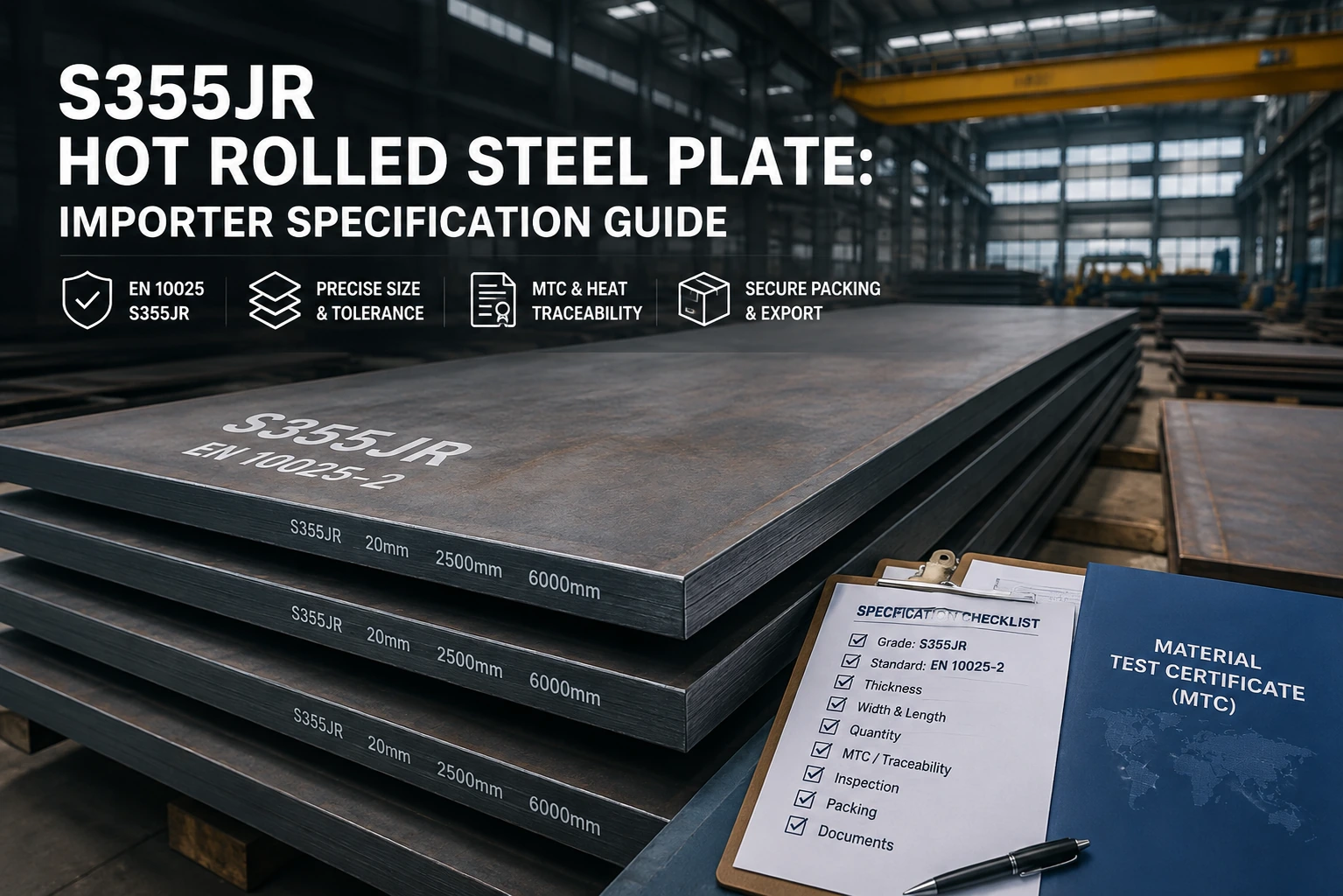
Importers sourcing S355JR hot rolled steel plate should define the required grade and standard, plate thickness, width and length, quantity, processing scope, Material Test Certificate (MTC) requirements, inspection needs, packing method, and destination documents before comparing prices. A quotation is only meaningful when suppliers are working from the same plate schedule and the same delivery scope.
For structural fabrication projects, S355JR is often discussed simply as a steel grade. In actual procurement, however, the grade name is only the starting point. Dimensions, processing, documentation, packing, and logistics can materially change both the quotation and whether the delivered steel can be accepted by the project.
Buyers preparing an S355JR inquiry can first review Maigaotuo’s Hot Rolled Steel Plate product page. Maigaotuo’s current product information describes hot-rolled steel plate as suitable for structural fabrication as well as machinery, bridges, and other applications. Exact S355JR availability, dimensions, processing, and documentation should still be confirmed against the specific order.
Start With the Standard, Not Just the Grade Name
An inquiry that says only “S355JR steel plate” leaves several important questions unanswered.
If the project calls for S355JR under EN 10025 or another specified standard route, that requirement should appear clearly in the RFQ. The supplier should not have to infer the standard from the grade name alone.
The same applies to material documentation. If the project requires an MTC, heat-number traceability, or particular inspection evidence, those requirements should be agreed before the order is approved.
A practical first check is:
| Item | What the Importer Should Define | Why It Matters |
|---|---|---|
| Grade | S355JR | Establishes the required material grade |
| Standard | Required EN/project standard or approved equivalent route | Prevents different standard assumptions between quotations |
| MTC requirement | Required certificate or batch evidence | Supports material acceptance and traceability |
| Inspection requirement | Any project- or buyer-specific inspection need | Avoids documentation disputes after production |
| Traceability | Required relationship between material and supplied documents | Helps verify the delivered batch |
Importers should ask what documentation can be provided for the actual material being quoted, rather than assuming every stock plate automatically comes with the same certificate package.
A Plate Schedule Makes Quotations Much Easier to Compare
Thickness, width, and length should normally be supplied line by line rather than as a general tonnage requirement.
For example, a useful plate schedule identifies:
Thickness × Width × Length × Quantity
This matters because two offers for the same total tonnage can have very different practical value.
One supplier may be quoting standard mill or stock dimensions. Another may be quoting material already cut closer to the buyer’s required sizes. The second quotation may have a higher unit price but reduce cutting waste and local fabrication work.
For each line item, the importer should confirm:
- Thickness
- Width
- Length
- Number of plates or required weight
- Standard size or cut-to-size requirement
- Any relevant tolerance requirement
- Required processing
- Part identification, if applicable
Maigaotuo’s Steel Plates category covers hot-rolled, cold-rolled, galvanized, and checkered steel plate products, so the RFQ should make it clear that the requirement is specifically for hot-rolled plate and identify the intended grade.
Thickness and Plate Size Affect More Than Material Cost
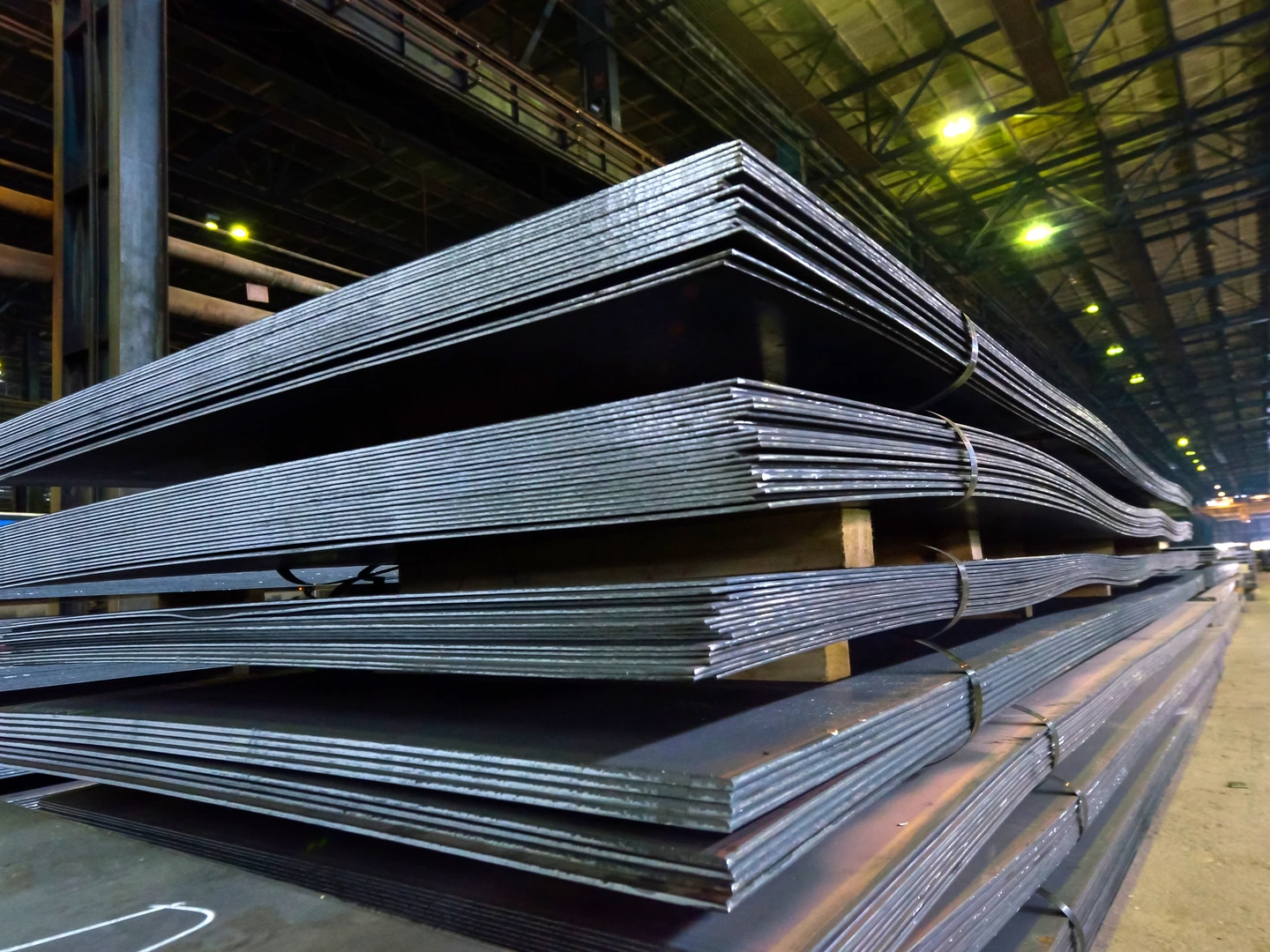
The dimensions selected for S355JR plate influence more than the steel price.
They can affect:
- Material utilization
- Fabrication yield
- Cutting waste
- Plate handling
- Shipping weight
- Container or loading arrangement
- Unloading at destination
- Storage
- Fabrication sequencing
This is why purchasing only on a “price per ton” basis can be misleading.
If the project ultimately needs many smaller structural components, the importer should compare the cost of buying standard-size plate and processing it locally against the cost of receiving cut or prepared pieces from the supplier.
The better option depends on the actual project workflow.
Define Processing Before Asking for the Final Price
Processing is one of the easiest ways for two apparently similar quotations to become incomparable.
Maigaotuo’s broader steel supply scope includes processing services such as cutting and bending, with other processing discussed according to the specific steel order. Where S355JR plates require processing before shipment, the buyer should define that work separately from raw material supply.
Depending on the project, the RFQ may need to address:
- Cutting
- Bending
- Drilling
- Beveling
- Other drawing-based preparation
- Part marking
- Sorting by drawing number or installation position
If processing is required, send drawings before the final quotation.
A drawing-based inquiry gives the supplier information that cannot be captured by a simple plate list, particularly where tolerances, hole positions, bevel details, or formed parts are involved.
Raw Plate and Processed Components Should Not Be Mixed
Suppose one quotation covers standard S355JR plates while another includes cutting to project dimensions.
The second offer will naturally contain additional cost.
Comparing only the final price per ton would therefore give the wrong impression.
The RFQ should clearly separate:
- Raw material supply
- Processing services
- Packing and marking
- Inspection/documentation
- Export and logistics scope
That makes supplier comparison much more transparent.
MTC and Heat Traceability Should Be Confirmed Before Order Approval
For structural steel projects, documentation can become just as important as the physical plate.
A low-priced shipment creates a serious procurement problem if the buyer later discovers that the documents do not match the project’s acceptance requirements.
Before approving the order, ask:
- What MTC or material certificate is available?
- Does the certificate relate to the material being supplied?
- Is heat-number or batch traceability required by the project?
- Does the buyer require any additional inspection evidence?
- Are document requirements included in the quotation?
These questions should be resolved before shipment, not when the plate arrives at the destination port.
The purpose is not to request the maximum possible documentation for every order. It is to make sure the supplied document package matches the actual structural project requirement.
Surface and Edge Requirements Should Match the Fabrication Plan
S355JR hot rolled plate may subsequently be cut, welded, coated, formed, or incorporated into a structural assembly.
The buyer should therefore state whether the project has any particular requirements regarding:
- Hot-rolled surface condition
- Plate edges
- Cut edges
- Further preparation
- Fabrication-ready parts
- Downstream coating or processing
Not every order needs a special surface or edge requirement.
But if these details affect the next production stage, they should not be left until after the steel has been purchased.
A useful rule is simple:
Specify the plate according to what happens after it arrives, not only according to what leaves the steel supplier.
Packing and Loading Can Change the Real Import Cost
Steel plate is heavy, and large dimensions can create practical loading and handling constraints.
Packing should therefore be discussed alongside material and processing requirements.
Useful points to confirm include:
- How different plate sizes will be stacked
- Whether processed parts need to be separated
- Bundle or part identification
- Rust-prevention expectations
- Loading method
- Port or delivery destination
- Unloading constraints
- Required commercial and export documents
These issues become more important when one shipment contains multiple plate sizes or processed components.
If the buyer needs parts packed according to fabrication sequence or drawing number, that requirement should be provided before packing begins.
Why the Lowest S355JR Price May Not Be the Lowest Project Cost
A steel plate quotation usually combines several cost layers.
The material price is only one of them.
Consider two suppliers:
Supplier A quotes a lower raw plate price but provides standard sizes only.
Supplier B quotes a higher price but includes cut-to-size preparation, project marking, required documentation, and packing according to the buyer’s plate schedule.
Supplier A may still be the better choice—but the buyer cannot know that until local cutting cost, waste, handling, and documentation requirements are included in the comparison.
A more useful comparison looks like this:
| Cost / Scope Item | Supplier A | Supplier B |
|---|---|---|
| S355JR material basis | Confirm | Confirm |
| Plate dimensions | Confirm | Confirm |
| Cutting / processing | Included or excluded | Included or excluded |
| MTC / documents | Confirm | Confirm |
| Inspection | Confirm | Confirm |
| Marking | Confirm | Confirm |
| Packing | Confirm | Confirm |
| Export handling | Confirm | Confirm |
Only after the scope is aligned does the unit price become commercially meaningful.
Common Problems in S355JR Plate RFQs
Asking Only for “S355JR Plate Price”
This does not tell the supplier the thickness, dimensions, quantity, processing scope, or documentation requirement.
Assuming Every Offer Includes the Same MTC
Certificate and traceability requirements should be confirmed for the actual offered material.
Sending Processing Drawings After Price Approval
Drawings can change material utilization, processing cost, tolerances, and packing. They should be provided before the final quotation.
Mixing Standard Plates and Cut Parts in One Price Comparison
A raw plate supplier and a supplier quoting processed components are not offering the same scope.
Leaving Packing Until the Shipment Is Ready
By then, changing marking, sorting, or stacking arrangements may add unnecessary cost or delay.
Choosing the Lowest Price Before Checking Documents
A price advantage can disappear quickly if the material cannot be accepted because the document package does not match project requirements.
Representative Importer Scenario: A Low Quote That Wasn’t Yet Comparable
Representative scenario — not a claimed customer case.
An overseas importer requests S355JR hot rolled steel plate for a structural fabrication project.
The original inquiry contains the grade, total quantity, and destination. One supplier responds with an attractive price, and the offer initially appears to be the best option.
During the technical review, however, several gaps appear.
The quotation does not define:
- Plate sizes by line item
- Cutting scope
- MTC evidence
- Part marking
- Packing by plate size
The buyer therefore cannot tell whether the quoted material will arrive ready for the intended fabrication workflow.
Instead of immediately negotiating the unit price, the importer prepares a revised plate schedule and adds the required processing, documentation, and packing information.
The suppliers can then quote on the same basis.
The purchasing decision has changed from:
“Who has the lowest S355JR price?”
to:
“Which quotation delivers the steel, documents, and processing scope the project actually needs?”
That is a much stronger basis for an import order.
What Should Be Included in an S355JR Steel Plate RFQ?
A practical RFQ can usually be prepared with the following information:
| RFQ Item | Information to Send |
|---|---|
| Product | S355JR hot rolled steel plate |
| Standard | Required EN/project standard or approved equivalent route |
| Thickness | Thickness by line item |
| Width | Required plate width |
| Length | Required plate length |
| Quantity | Pieces or tonnage by size |
| Processing | Raw plate or required cutting/bending/drilling/beveling |
| Drawing | Attach where processing is required |
| Tolerance | Project-specific requirement where applicable |
| MTC | Required certificate or batch evidence |
| Inspection | Any buyer/project inspection requirement |
| Surface / edge | Relevant condition if required |
| Marking | Plate or part identification requirement |
| Packing | Stacking, separation, marking and protection expectations |
| Destination | Country, port, or project destination |
| Documents | Required export and project documents |
For buyers sourcing several steel products together, Maigaotuo’s broader steel product range provides context on its available steel categories and sourcing scope.
Questions Importers Commonly Ask
Is S355JR enough information for a quotation?
No. A usable quotation should also define the required standard, thickness, width, length, quantity, processing scope, documentation, packing, and destination.
Should I ask for an MTC when requesting the quote?
If the project requires an MTC or specific batch evidence, include that requirement in the RFQ and ask the supplier to confirm what can be provided for the offered material.
Should drawings be sent before or after the steel price is confirmed?
Send them before the final quotation whenever cutting, bending, drilling, beveling, or other preparation is required. Processing details can materially change the price and material utilization.
Is cut-to-size S355JR plate always more expensive?
Processing adds cost, but that does not automatically mean the total project cost is higher. Importers should also consider local cutting cost, scrap, handling, and usable material yield.
Why does packing matter when importing hot rolled steel plate?
Different plate dimensions and processed parts may require specific stacking, marking, protection, and loading arrangements. Clear packing instructions can reduce sorting and handling problems at destination.
What should I send Maigaotuo for an S355JR inquiry?
Send the plate schedule, required standard, quantity, processing drawings where applicable, MTC and inspection requirements, packing expectations, destination, and required documents.
Prepare the Plate Schedule Before Comparing Offers
The most efficient way to source S355JR hot rolled steel plate is to make the technical requirement clear before starting commercial negotiations.
Begin with the required grade and standard, then build a plate schedule covering dimensions and quantities. Add drawings for any required processing, define the MTC and inspection requirements, and state how the material should be marked, packed, and delivered.
Importers can review Maigaotuo’s company profile for its broader steel supply and export-service background.
Once the plate schedule and project requirements are ready, send them through Contact Maigaotuo for order-specific confirmation of S355JR availability, processing, documentation, packing, and export handling.