
How Should Overseas Buyers Verify a Steel Pipe Material Test Certificate Before Shipment?
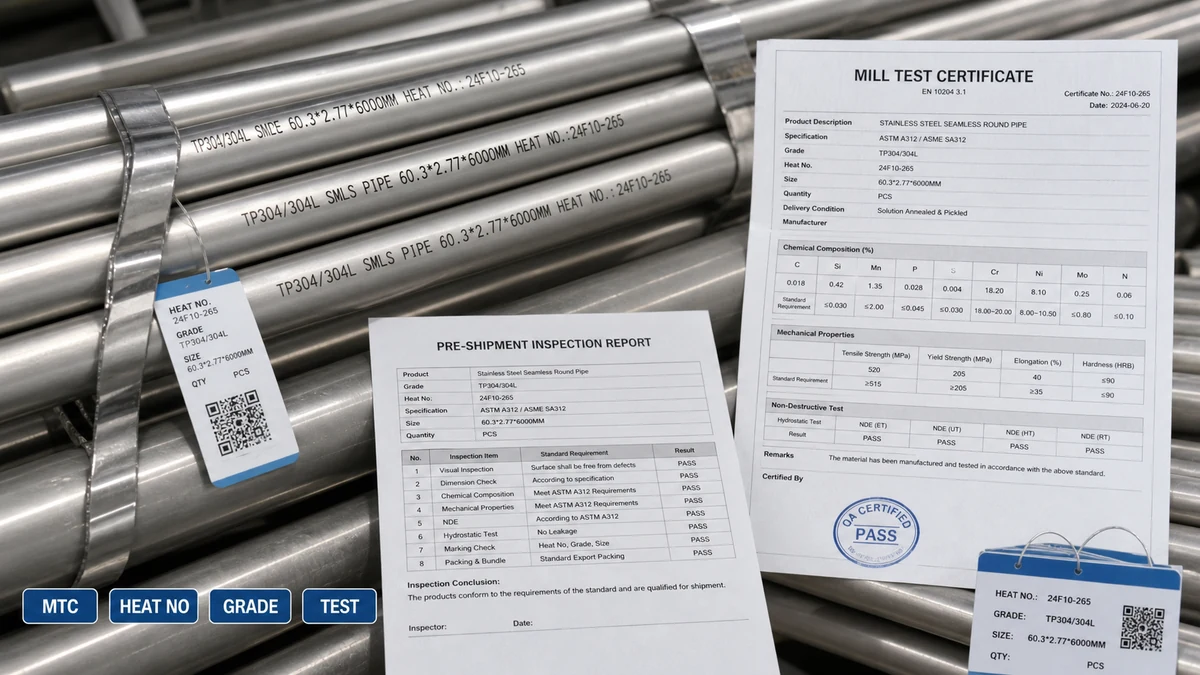
This verification is important for importers, EPC contractors, pipeline project buyers, steel distributors, fabricators, and equipment manufacturers purchasing mixed grades or international-standard materials. Buyers sourcing from the steel pipes product range should define the required certificate type and traceability evidence in the purchase order instead of requesting “MTC included” as a general statement.
What Must a Steel Pipe Material Test Certificate Prove?
A steel pipe material test certificate, also commonly called an MTC, mill test certificate, or material test report, is useful only when it proves that the delivered material corresponds to the ordered material. It should not be treated as an isolated laboratory sheet. The buyer must be able to connect the certificate to the actual pipes or fittings being shipped.
| Verification Gate | Evidence to Compare | Shipment Risk if It Fails |
|---|---|---|
| Purchase order identity | Product type, standard, grade, size, wall thickness, quantity, delivery condition, and special requirements | The certificate may describe a technically different material even when the grade name looks similar. |
| Heat or lot traceability | MTC heat number, pipe stencil, bundle tag, packing list, inspection photos, and cutting records | The buyer cannot prove that the tested heat is the heat being delivered. |
| Chemical compliance | Reported elements, units, analysis type, and limits in the ordered standard and grade | Material composition may fall outside the ordered grade or be reported incompletely. |
| Mechanical compliance | Yield strength, tensile strength, elongation, impact, hardness, flattening, or other required results | The material may not meet the required strength, toughness, forming, or service conditions. |
| Document authenticity and continuity | Issuer, certificate number, page numbering, dates, authorization, signatures, revisions, and visible alterations | An incomplete, altered, or unrelated document may be accepted as shipment evidence. |
How Should Buyers Match the Purchase Order to the MTC?
Begin with the commercial and technical order, not with the test values. The certificate header should match the ordered product description, standard edition, grade, dimensions, manufacturing route where specified, heat treatment or delivery condition, and quantity or weight reference.
A common purchasing mistake is accepting a familiar grade name without checking the full standard and delivery condition. Similar designations used under different standards are not automatically interchangeable. A certificate may show chemically similar material while still failing the contract because dimensions, testing scope, heat treatment, supplementary requirements, or inspection documentation differ.
Before approving the document, buyers should check:
- Whether the manufacturer or issuing organization is identified consistently across all pages
- Whether the product description matches pipe, tube, bend, reducer, or another ordered item
- Whether the standard and grade are written exactly as required in the purchase order
- Whether outside diameter, wall thickness, length, quantity, and weight correspond to the shipment
- Whether heat treatment, coating, end preparation, or delivery condition is included when required
- Whether supplementary tests and project-specific acceptance criteria appear in the document
How Can Buyers Trace the Heat Number From Pipe to Certificate?
The heat number is the central link between the test certificate and the physical material. Buyers should trace it in both directions: from each MTC to the associated bundles, and from each bundle or pipe group back to an MTC.
The same heat or lot identity should be visible in the certificate, pipe marking or stencil, bundle tag, packing list, and pre-shipment inspection record. When individual pieces cannot carry full marking, the buyer should require an agreed identification method that preserves the relationship between the material and its original heat.
What Changes After Cutting, Beveling, or Fabrication?
Traceability can be lost after stock material is cut into shorter lengths or processed into components. The risk is higher when several heats, grades, or wall thicknesses are processed at the same time. Buyers should require the processor to transfer the heat identity to cut pieces, separate mixed lots, and retain a cutting or processing record.
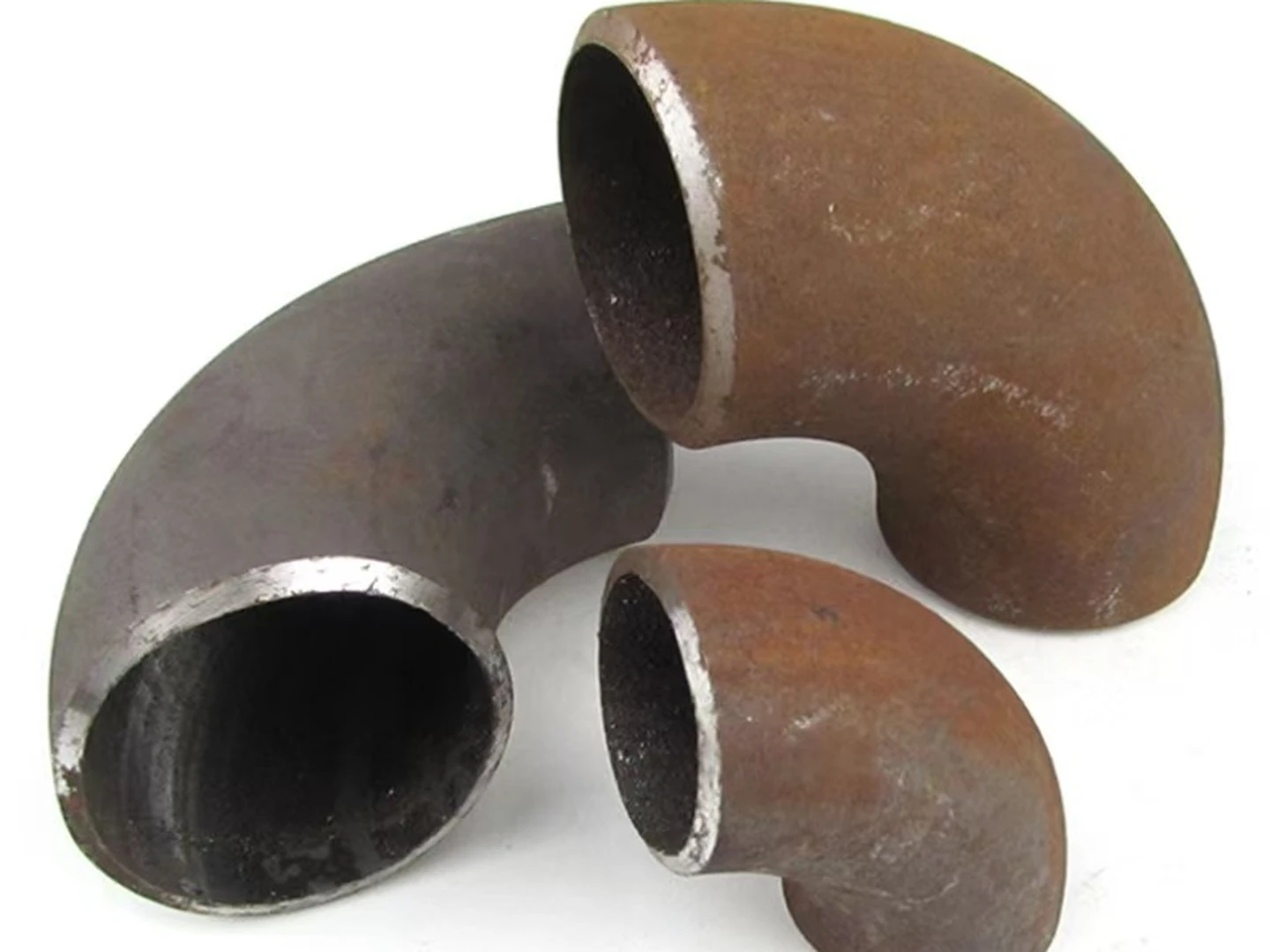
This control also applies to fittings. For example, a shipment containing steel pipe bends should link each applicable batch or heat reference to the corresponding material document and product markings. The buyer should not assume that the certificate for the original straight pipe automatically proves the identity of every processed component unless traceability through production is documented.
How Should Chemical and Mechanical Results Be Reviewed?
Test values should be checked against the exact standard, grade, product form, thickness range, and delivery condition named in the purchase order. Buyers should not compare results with a generic online table when the contract refers to a specific standard edition or supplementary requirement.
Chemical Composition Checks
- Confirm that all required elements are reported and use the correct units.
- Identify whether the values represent heat analysis or product analysis when the distinction matters.
- Check that decimal places and rounding do not conceal an out-of-limit result.
- Compare carbon equivalent or other calculated values only when required by the order or project specification.
- Question results that are duplicated across unrelated heats or appear inconsistent with the stated grade.
Mechanical and Supplementary Test Checks
- Confirm yield strength, tensile strength, and elongation against the required acceptance limits.
- Review impact-test temperature, specimen orientation, and absorbed-energy requirements where applicable.
- Check hardness, flattening, flaring, bending, hydrostatic, eddy-current, ultrasonic, radiographic, or other results only when the product standard or order requires them.
- Verify that test dates and specimen references are consistent with the certificate and production records.
- Do not treat “PASS” as sufficient when the purchase order requires actual numerical results or a specific inspection report.
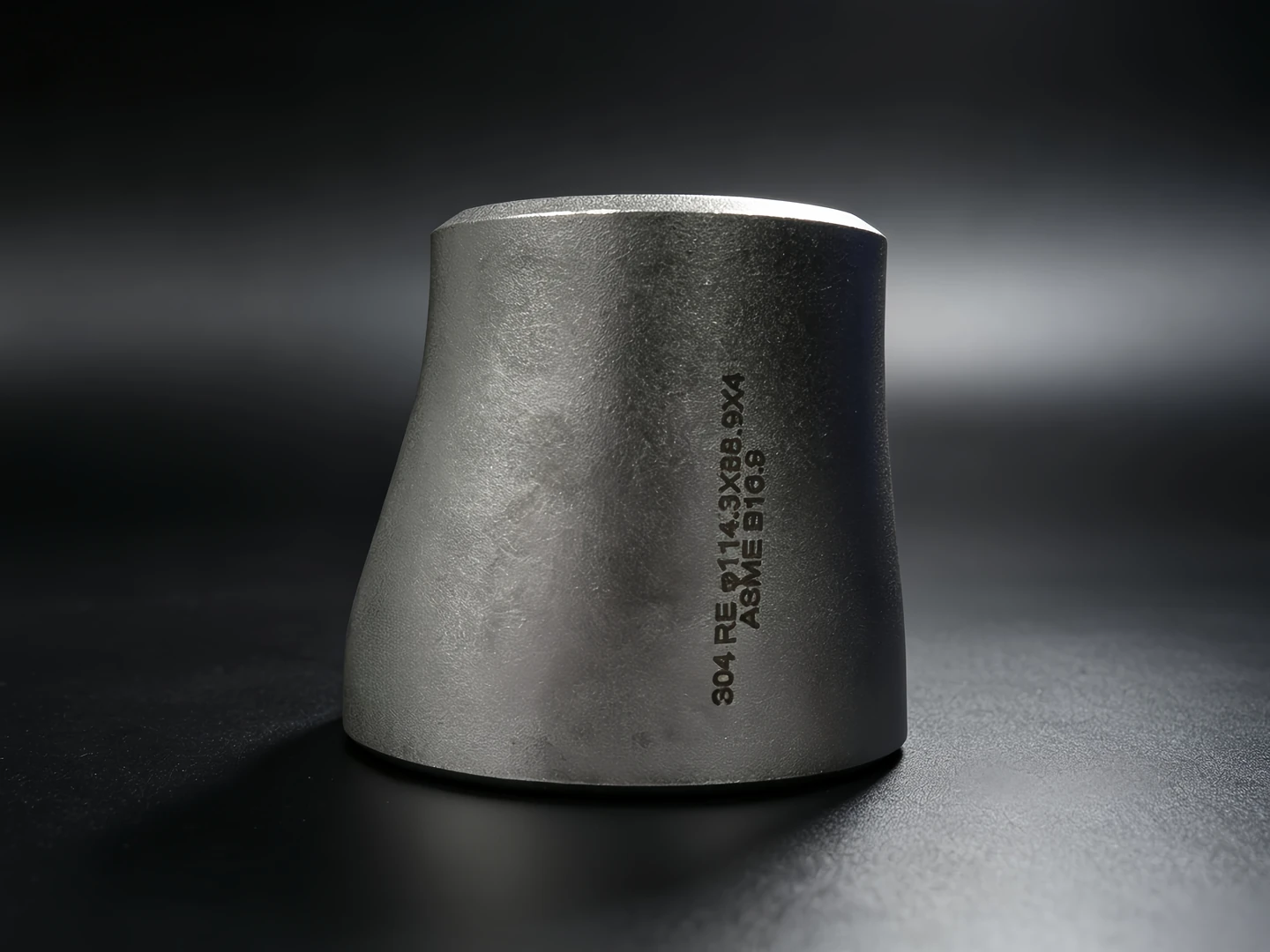
Mixed-specification orders require extra attention because material systems can look similar after packing. A carbon steel pipe certificate should not be used to support stainless products, and different stainless grades should remain separately identified. When reviewing a product such as a stainless steel reducer, buyers should verify that the grade, product form, dimensional standard, and traceability documents correspond to that fitting rather than to another item in the shipment.
Which Certificate Type and Inspection Evidence Are Required?
The required certificate type should be written into the purchase order before production or sourcing begins. A supplier cannot reliably resolve an inspection-document requirement after the material has already been produced, processed, or packed.
When EN 10204 or another project documentation system applies, buyers should confirm the exact certificate type required by the contract, project owner, consultant, or destination market. A certificate accepted for a routine commercial order may not be sufficient for a pressure system, energy project, critical structure, or client-controlled inspection plan.
Depending on the purchase order, additional evidence may include:
- Third-party inspection or witnessed testing
- Non-destructive testing reports
- Hydrostatic test records
- Dimensional inspection reports
- Coating or galvanizing inspection records
- Positive material identification reports
- Heat-treatment charts or processing records
- Photos showing markings, bundle tags, quantity, and packing condition
What Document Red Flags Should Stop Shipment Approval?
A certificate should be placed on hold when its inconsistencies prevent the buyer from proving material identity or compliance. The correct response is to request source evidence and a controlled correction, not to manually edit the supplier’s document.
| Red Flag | Possible Cause | Required Buyer Action |
|---|---|---|
| Heat number on the bundle does not appear on the MTC | Wrong bundle, retagging error, mixed stock, or incomplete traceability | Quarantine the affected material and request a heat-to-bundle reconciliation. |
| Standard, grade, or dimensions differ from the purchase order | Substitution, clerical error, or certificate from another item | Request a written deviation proposal or replacement; do not approve silently. |
| Pages use inconsistent fonts, numbering, dates, or formatting | Revision, scanning problem, page replacement, or document alteration | Request a clean complete copy from the issuing source and verify the certificate number. |
| Test values are missing or shown only as “PASS” | Certificate type or reporting scope does not meet the order | Compare with the PO and request the required numerical results or supporting report. |
| One MTC is used for unrelated grades or product forms | Document shortcut or incorrect shipment grouping | Require separate traceable documentation for each applicable heat, grade, and product group. |
| Cut pieces have no transferred heat identification | Traceability was lost during processing | Hold shipment until the processor provides a documented reconstruction accepted by the buyer. |
What Happens in a Typical Mixed-Specification Export Order?
Scenario: Steel Pipes and Fittings for an EPC Shipment
Business Background: An overseas EPC buyer orders carbon steel pipes, processed pipe bends, and stainless steel reducers for one consolidated shipment. The products use different grades and standards, and some pipes are cut to project lengths before packing.
Problem: During pre-shipment document review, the MTCs appear complete, but one bundle tag shows a heat number that is not listed on the corresponding packing line. Several cut lengths also carry only size markings without transferred heat identification.
Cause: Material from two stock bundles was processed during the same cutting schedule. The packing list was prepared by product size, while the workshop records were maintained by original bundle. The document chain therefore failed to connect the cut pieces, bundle tags, packing list, and MTCs.
Recommended Solution: The affected material is held before loading. The supplier separates the pieces, reconciles original heat records, restores approved identification, updates the packing map, and provides new marking photographs. The buyer approves shipment only after each product group can be traced from the purchase order to the physical marking and supporting certificate.
Buyer Decision Value: Delaying the shipment review at this stage is usually less costly than discovering an untraceable material batch after customs clearance, fabrication, installation, or client inspection.
What Should Buyers Include in the Pre-Shipment MTC Checklist?
| Checklist Item | Minimum Evidence | Approval Decision |
|---|---|---|
| Order requirements | Final PO, specification, approved deviations, standard edition, and inspection plan | Proceed only when the document requirement is unambiguous. |
| Certificate identity | Issuer, certificate number, date, page count, authorization, and revision status | Reject incomplete or internally inconsistent files. |
| Material identity | Product, grade, dimensions, heat treatment, quantity, and heat or lot number | Every shipment line must map to the correct certificate. |
| Test compliance | Chemical, mechanical, and supplementary results required by the order | Resolve missing, out-of-limit, or unexplained values. |
| Physical traceability | Pipe markings, bundle tags, fitting marks, cutting records, and inspection photos | Hold any material that cannot be traced to the MTC. |
| Shipping consistency | Packing list, weight list, package numbers, shipping marks, and loading plan | Approve only when documents and packed goods use the same identification system. |
Frequently Asked Questions
What is the difference between an MTC and an MTR?
In many purchasing discussions, “material test certificate,” “mill test certificate,” and “material test report” are used for closely related documents. Buyers should focus less on the abbreviation and more on the certificate type, issuer, required test results, and traceability specified in the purchase order.
Does every steel pipe need its own heat number marking?
The required marking method depends on the product standard, order, size, processing condition, and agreed traceability plan. The buyer must still be able to connect each delivered pipe or controlled bundle to the correct heat or lot and supporting certificate.
Is an EN 10204 3.1 certificate always sufficient?
No certificate type is automatically sufficient for every project. The contract, project specification, owner, consultant, applicable standard, or inspection plan may require a different document level or third-party involvement. The requirement should be fixed before order placement.
Can buyers approve an MTC before seeing pipe markings?
They can review the document in advance, but final shipment approval should also verify physical markings, bundle tags, packing records, and photos. A correct-looking PDF does not prove that the documented material is the material being loaded.
What should happen when pipes are cut into shorter lengths?
The processor should preserve heat-number traceability through transferred marking, controlled grouping, and cutting records. When identity is lost, the affected pieces should be placed on hold until the buyer accepts a documented method of reconstruction or replacement.
How can a buyer check whether an MTC has been altered?
Review page continuity, formatting, dates, certificate numbers, signatures, revisions, and consistency with other shipment records. When anything appears suspicious, request a complete clean copy from the issuing source and obtain supporting production or inspection evidence. Visual review alone cannot guarantee authenticity.
When should third-party inspection be requested?
Third-party inspection may be appropriate when required by contract, project specifications, destination rules, client approval plans, critical service conditions, or the buyer’s risk policy. The scope and witnessing points should be agreed before production or testing.
Request a Shipment-Specific Certificate Review
For a shipment-specific review, provide the purchase order, product list, required standards and grades, dimensions, quantities, draft MTCs, heat-number photographs, processing requirements, packing list, destination, inspection scope, and delivery schedule through the MGTSP technical review and quotation page. Maigaotuo can help compare the requested material scope with available steel products, processing arrangements, certificate records, export packing, and shipment documentation before order release or loading.