
What Should Buyers Ask a Carbon Steel Pipe Elbow Supplier From China Before Sending an RFQ?
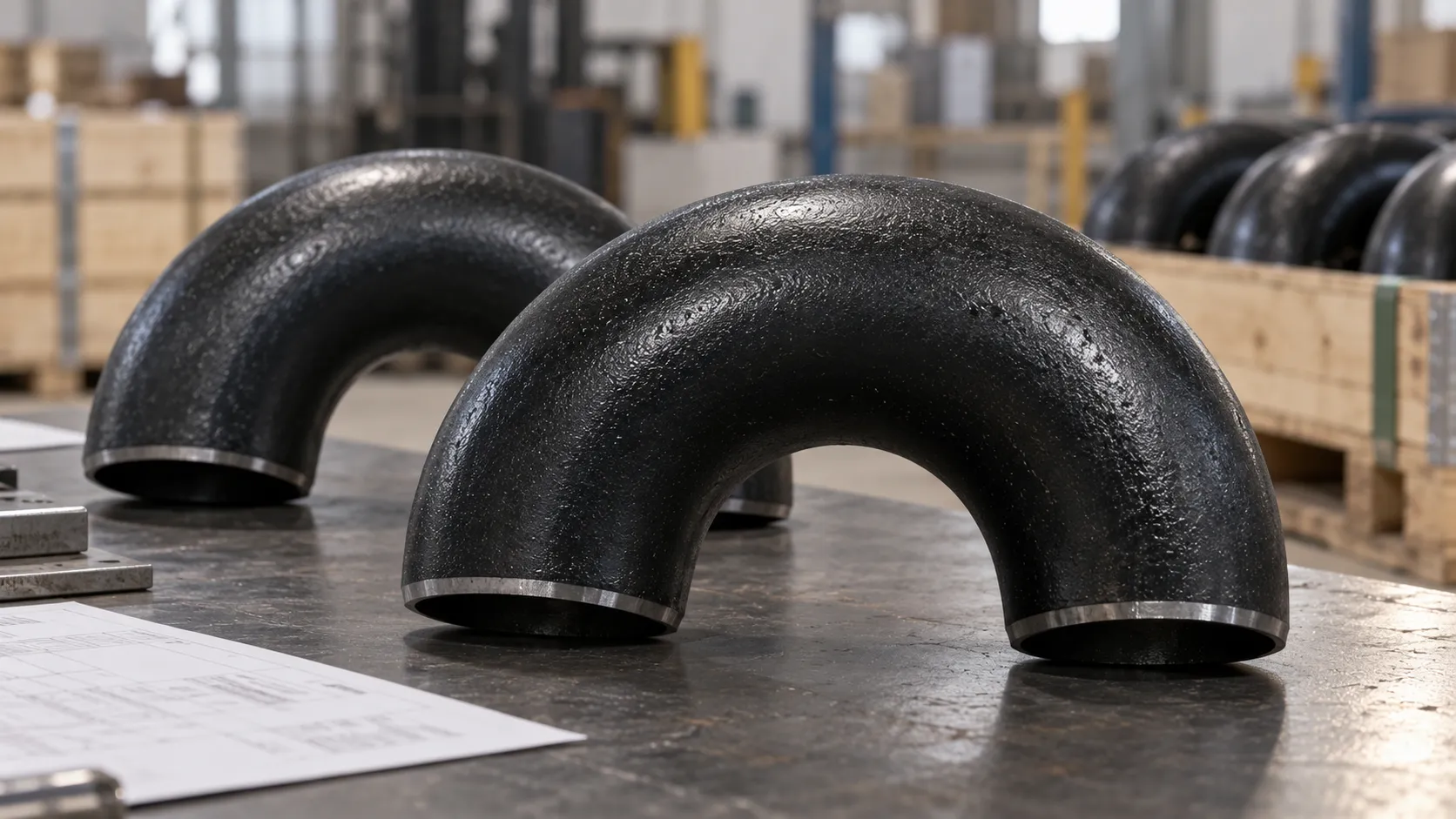
A buyer should qualify a carbon steel pipe elbow supplier from China by verifying product scope, governing standard, material grade, elbow geometry, pipe size and wall, end preparation, manufacturing route, inspection evidence, traceability, coating, packing and export-document responsibilities before requesting a final quotation. Maigaotuo’s target product for this topic is a Carbon Steel 180° Elbow intended for U-turn pipeline layouts. The sourcing risk is not simply choosing the wrong supplier; it is comparing offers that describe different fittings. A useful RFQ therefore starts by defining the exact elbow and then asks the supplier to prove that the offered scope matches it.
First Confirm That the Supplier Is Quoting the Same Elbow You Need
“Carbon steel pipe elbow” covers several geometries and service conditions. A 45° elbow, 90° elbow and 180° return do different jobs in a piping layout. Long-radius and short-radius configurations also change center-to-center dimensions and space requirements. If the buyer sends only nominal pipe size and material, the supplier may return a technically different fitting.
For this procurement path, the target product is a 180° elbow. Maigaotuo describes its Carbon Steel 180° Elbow as a hot-formed fitting for U-turn layouts with uniform wall thickness and weld-ready bevels. Before price comparison, the buyer should still specify whether the project calls for a long-radius return, short-radius return or another geometry defined by the governing drawing or standard.
Maigaotuo groups related fittings under its Elbow category. That is useful for product discovery, but the RFQ should identify the exact fitting rather than ask the supplier to choose an elbow type from a general category.
Ask Which Dimensional Standard Controls the Offered Fitting
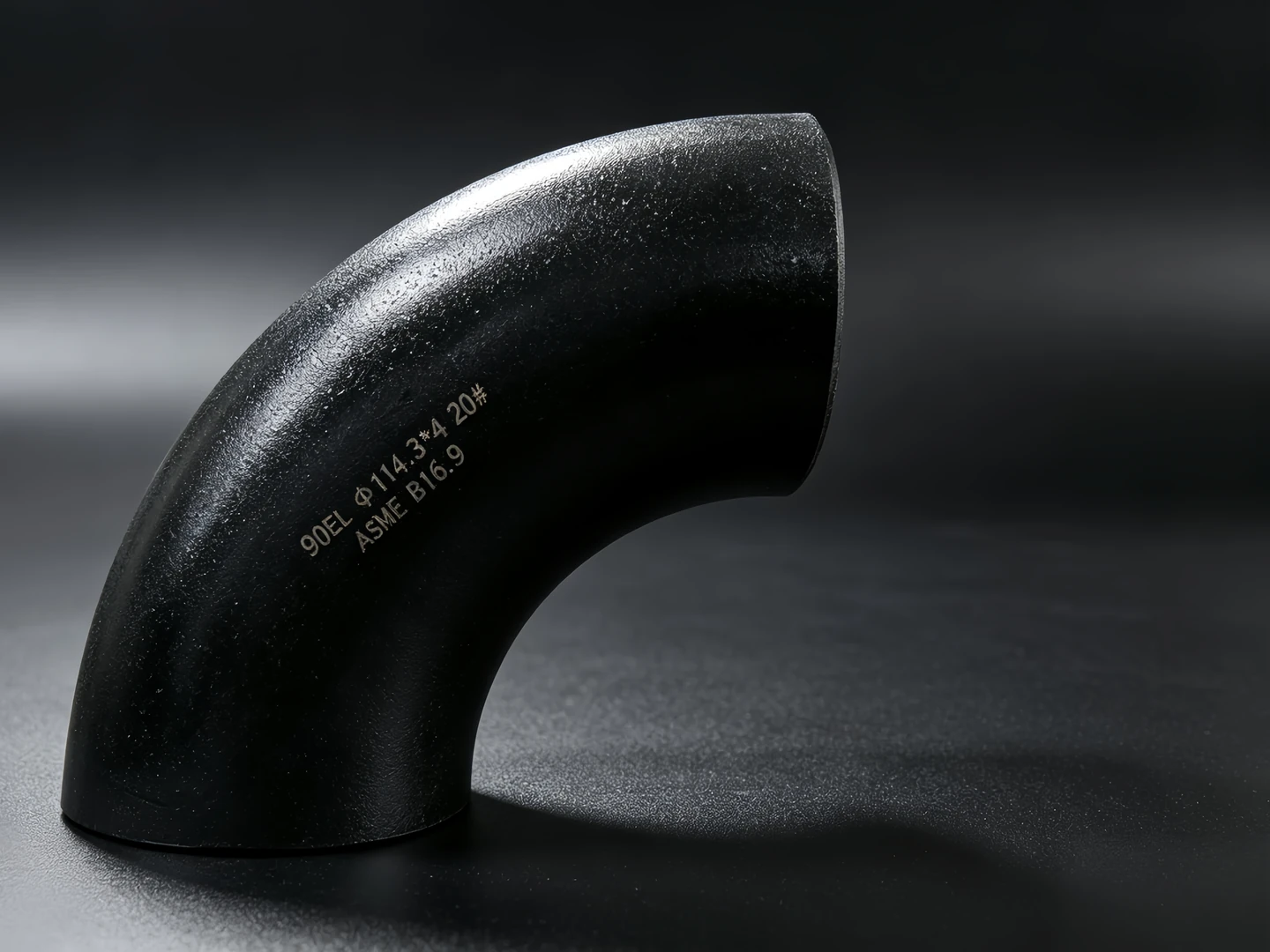
For factory-made wrought butt-welding fittings, ASME B16.9 is a common dimensional reference. ASME currently lists B16.9-2024, covering dimensions, tolerances, ratings, testing and markings for factory-made wrought butt-welding fittings. If the project invokes that standard, the RFQ should identify the required edition rather than simply saying “ASME elbow.”
This is important because standards are not interchangeable labels. The buyer may be purchasing to ASME, EN, GOST or another project-specific system. Dimensions, tolerances, material designations, markings and documentation can differ. A supplier experienced in export business may handle multiple standards, but capability should be confirmed against the specific RFQ rather than assumed from a company profile.
The supplier response should repeat the dimensional standard and edition used for the quotation. If a project drawing overrides a standard dimension, that deviation needs engineering approval and should be visible in the commercial offer.
Material Specification and Grade Must Be Written Explicitly
“Carbon steel” is not a complete material specification. For wrought carbon steel fittings used in pressure piping, ASTM A234/A234M is one widely used material specification. ASTM currently lists A234/A234M-26 as active. A project might require a grade such as WPB, or it may use another material standard entirely. The buyer should state the required specification and grade rather than asking for a generic carbon steel elbow.
This matters because material documents, heat treatment, testing and traceability requirements follow the specified material system. If one supplier quotes a fitting to the requested standard and another quotes an unspecified commercial grade, the quotations are not technically equivalent.
Do not allow the supplier to infer material from operating pressure alone. The engineering specification should define the material; the supplier should confirm availability and return any proposed alternative as a deviation.
Nominal Size and Wall Thickness Must Match the Connected Pipe
The elbow is part of a piping system, so its nominal pipe size and wall thickness or schedule must match the connected pipe and the project design. A 180° return that fits the nominal diameter but uses a different wall can create fit-up, welding and pressure-design problems.
The RFQ should state NPS or DN, the required wall thickness or schedule, and whether the connected pipe uses any special dimensional condition. Where the project includes corrosion allowance or a nonstandard wall, the buyer should clarify how that requirement is applied to the fitting.
Uniform wall thickness is a useful manufacturing objective, but the procurement question is more specific: what wall is being offered, what dimensional tolerance controls it, and what evidence will demonstrate compliance? The supplier should return those items in the technical offer rather than relying on a product description.
Radius and Center-to-Center Dimensions Affect Layout Fit
A 180° elbow is often selected because the pipeline must reverse direction within a defined envelope. Radius therefore affects both pressure-flow behavior and physical fit. Long-radius and short-radius returns occupy different amounts of space.
The buyer should provide the piping layout or state the required radius and center-to-center dimension according to the applicable standard. If equipment nozzles, supports or adjacent lines restrict available space, a general “180° elbow” request is not enough.
A supplier qualification discussion should test whether the company can read the project dimension correctly and confirm the offered geometry before the RFQ is commercialized. The risk of getting this wrong is practical: the fitting can arrive with correct material but still fail to fit between connection points.
End Preparation Should Be Treated as a Welding Interface
For butt-weld elbows, bevel geometry affects field or shop welding. The supplier should know whether the buyer requires standard weld-ready ends, a project-specific bevel or another end condition. A product page that mentions weld-ready bevels establishes the product direction, but the RFQ must still define the required end preparation.
Check whether the quotation includes beveling and whether the bevel is based on the dimensional standard, pipe wall and project welding procedure. If the buyer plans to machine ends after receipt, that responsibility should be separated from the supplier’s scope.
The interface matters because end preparation that does not match the connected pipe can increase fit-up time or require re-machining before welding. It is therefore a procurement variable, not a minor finishing detail.
Ask the Supplier to Declare the Manufacturing Route
Carbon steel elbows can be produced through different forming routes depending on size, wall, material and standard. Maigaotuo’s target product is described as hot-formed. The buyer should ask the supplier to identify the actual manufacturing route for the quoted fitting and confirm whether the fitting is seamless or welded when that distinction is controlled by the purchase specification.
The purpose is not to prefer one route automatically. The purpose is to make sure the manufacturing route aligns with the governing material standard, dimensional standard and project requirement. If the RFQ requires a seamless fitting, a welded alternative cannot be treated as equivalent without approval.
This question also helps the buyer evaluate documentation. The route used should be consistent with the material records, inspection plan and marking on the supplied fitting.
Inspection and Test Requirements Should Be Defined Before Pricing
A supplier can quote the same elbow with very different inspection scopes. One price may include only routine factory inspection. Another may include project-specific dimensional inspection, material verification, nondestructive testing or third-party witnessing.
The RFQ should state what is required. If the governing material or dimensional standard already defines mandatory tests, the supplier should confirm compliance with that requirement. If the project requires additional NDT, PMI, hardness, impact testing, hydrostatic testing, third-party inspection or special documentation, write those items separately.
Do not ask for “full testing” without defining what it means. That phrase produces quotations that are difficult to compare and can create disputes after production.
Traceability Must Link the Delivered Fitting to Its Documents
For industrial piping procurement, material evidence is useful only when it can be connected to the actual fitting. Ask how heat or batch identification is maintained from material input through production and marking. The required level of traceability should follow the purchase specification.
Where material test certificates are required, check whether they identify the material specification, grade, heat number and relevant chemical or mechanical results. If the project needs EN 10204 3.1 documentation or another certificate type, that requirement should be written explicitly rather than assumed.
The buyer should also ask how marking will appear on the fitting and packaging so incoming inspection can match the physical item to the document package.
Coating, Surface Protection and Packing Need Their Own RFQ Fields
Carbon steel fittings can require temporary rust protection, paint, coating or bare delivery depending on the project. Export transport adds another variable because fittings may be exposed to humidity and handling before installation.
The buyer should state the required surface condition and whether coating is part of the supplier’s scope. If a coating system is specified, identify the required system rather than asking for “anti-rust coating.” The supplier should also confirm how bevels and internal surfaces are handled.
Packing should be matched to fitting size, quantity and transport route. For smaller elbows, boxed or palletized packing may be practical; larger fittings may require different restraint and protection. The RFQ should ask the supplier to describe the proposed export packing instead of treating packing as a hidden assumption.
Audit the Supplier’s Document Scope Before Comparing Price
| Supplier Question | Why It Matters | Evidence to Request |
|---|---|---|
| Which standard and edition are you quoting? | Prevents dimensional or marking mismatches | Technical quotation identifying the governing standard |
| Which material specification and grade will be supplied? | Separates compliant material from generic carbon steel | Material specification and certificate scope |
| What size, wall and radius are included? | Confirms the fitting matches the connected pipe and layout | Dimensional data or approved drawing |
| What manufacturing route is proposed? | Checks alignment with the project and material standard | Supplier declaration and product documentation |
| What inspection and tests are included? | Prevents price comparison across different QC scopes | Inspection/test plan or quotation list |
| How is heat or batch traceability maintained? | Connects the fitting to material evidence | Marking and material-document explanation |
| What coating and packing are included? | Defines delivered condition and export protection | Quotation scope and packing proposal |
A strong supplier answer makes assumptions visible. A weak answer leaves critical fields blank and relies on generic phrases such as “standard quality” or “international standard.” Before shortlisting, the buyer should know exactly what those phrases mean in the offered scope.
Use the Target Product Page to Check Product Fit, Not to Replace the RFQ
Maigaotuo’s Carbon Steel 180° Elbow page is relevant when the pipeline requires a U-turn configuration. The product description supports the general product fit: carbon steel construction, hot-formed strength, uniform wall emphasis and weld-ready ends.
The page does not define the buyer’s exact material grade, NPS/DN, schedule, radius, standard edition, inspection scope, coating or packing. Those fields belong in the project RFQ.
This distinction is central to supplier qualification. A product page proves the supplier is discussing the right product family. The RFQ proves whether the offered fitting is right for the buyer’s exact system.
When Should the Buyer Reject or Reopen the Supplier Offer?
Reopen the offer if the supplier changes the material standard, grade, size, wall, radius, end preparation or manufacturing route without clearly declaring the change. The same applies when required inspection documents are missing from the commercial scope.
The decision also changes when the project is not a conventional butt-weld piping system, when a custom geometry replaces a standard 180° return, or when service temperature, sour service, low-temperature toughness or another operating condition introduces additional material and testing requirements. Those cases need a project-specific engineering review rather than a generic elbow RFQ.
Build the RFQ So Supplier Qualification and Pricing Happen in the Right Order
A complete RFQ should state the 180° elbow geometry, governing dimensional standard and edition, material specification and grade, NPS/DN, wall or schedule, radius, end preparation, manufacturing-route requirement if any, service conditions, inspection and test scope, certificate requirements, coating, marking, packing, quantity and delivery basis.
Ask the supplier to return a technical offer that identifies the proposed fitting, every included document and inspection item, and all deviations. Only after that scope is aligned should the buyer compare price and delivery.
Maigaotuo operates as an international steel products supplier with steel sourcing, processing, documentation and export-logistics services rather than as a single-product fitting factory. For importers and project buyers, that makes responsibility mapping especially important: the quotation should clarify what is produced by the mill or fitting manufacturer and what is coordinated by the supplier. Once the RFQ is complete, submit it through Maigaotuo’s inquiry form so the technical and commercial scope can be reviewed together.