
Selecting 316 Stainless Steel Angle Bar: What Project Conditions Should Buyers Confirm?
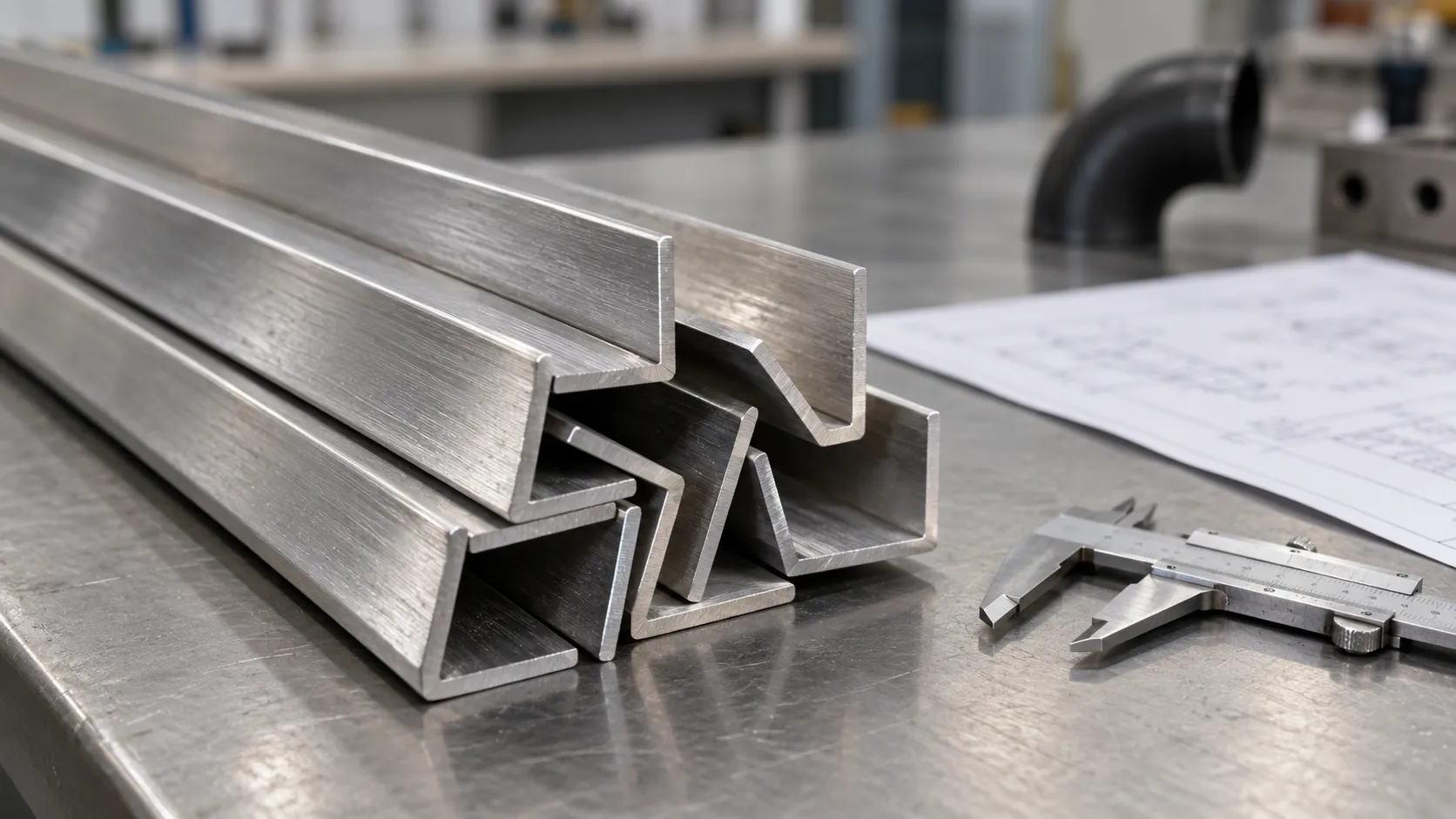
A 316 stainless steel angle bar should be selected from the project environment and structural or fabrication requirement, not from grade name alone. Before comparing suppliers, define the service exposure, equal- or unequal-leg geometry, leg dimensions, thickness, length, load path, surface condition, fabrication scope, inspection documents and delivery form. Maigaotuo’s Stainless Steel Angle Bar is positioned for frames, supports, brackets and structural reinforcement, which makes it relevant to many industrial and project applications. The final RFQ still needs to convert “316 angle bar” into a complete section specification that can be checked against the drawing and installation conditions.
Start With the Service Environment Before Freezing Grade 316
Buyers often start with “316” because the grade is associated with stronger corrosion resistance than 304, especially in chloride-bearing environments. That is directionally reasonable: industry guidance notes that the molybdenum in Type 316 improves resistance to localized corrosion compared with Type 304, particularly where chlorides can promote pitting. But grade selection still depends on the actual environment rather than a general reputation.
An indoor equipment frame in a controlled plant, a support near coastal air, a bracket exposed to washdown, and an angle installed around a chemical process area do not impose the same corrosion conditions. Temperature, chloride level, retained moisture, cleaning chemicals, crevices and the ability to wash deposits from the surface all affect the decision. If these conditions are unknown, a buyer cannot tell whether 316 is necessary, sufficient or simply a default specification copied from another project.
The RFQ should therefore state the service environment in plain engineering terms. Identify whether the angle bar is indoors or outdoors, whether it sees salt spray or process chemicals, whether it is continuously wet or intermittently washed, and whether the project specification already mandates 316. If the material grade comes from an engineering drawing or client specification, that document controls; the supplier should not silently substitute another grade.
Confirm the Product Family Before Comparing Quotations
Stainless steel angle bar belongs to a wider group of stainless steel sections. Buyers comparing angle, channel, flat bar and other shapes should first confirm that the L-shaped section is actually the correct load-carrying and fabrication geometry for the project. Maigaotuo groups these products under its Stainless Steel Sections category.
That category is useful for product discovery, but the RFQ must remain angle-bar specific. A quotation for a flat bar or formed sheet strip should not be treated as equivalent to a rolled or otherwise supplied L-section simply because the material grade is the same. The section geometry affects bending stiffness, connection layout, edge alignment and fabrication behavior.
Where the drawing calls for an angle bar, the supplier response should identify the offered section type and confirm whether it is supplied as a standard section or produced to a project-specific size. That distinction can influence dimensional control, production route, order quantity and lead-time assumptions, even though those commercial values should be confirmed rather than assumed.
Equal-Leg and Unequal-Leg Geometry Changes the Design Relationship
“Angle bar” is incomplete unless the leg geometry is defined. Equal-leg angles use the same nominal dimension on both legs, while unequal-leg angles use different leg widths. The choice changes how the section fits against supporting surfaces, how fasteners are positioned and how loads are transferred through the connection.
For a bracket fixed to one surface and supporting another component, the longer leg may be needed on the loaded side. For a symmetrical frame or corner reinforcement, an equal-leg section may be easier to coordinate. The buyer should not expect the supplier to infer this from a photo or application description.
Write the section as a dimensional requirement: leg A × leg B × thickness, together with length. If the project uses a drawing, the drawing should also identify orientation so the fabricator knows which leg interfaces with which component. If the supplier offers only a different geometry, that should be returned as a declared deviation rather than quoted as though it were the requested section.
Thickness and Leg Size Must Be Connected to the Load Path
Leg width and thickness are not simply ordering numbers. They determine section stiffness, connection area, edge distance available for holes and the amount of material available around welded or bolted connections. A heavier angle may offer more stiffness but also increases weight and can complicate forming, welding or installation. A thinner angle may be easier to fabricate but can be unsuitable if the design depends on greater section rigidity.
The supplier is not responsible for replacing the project engineer’s structural design. The buyer should provide the approved size or the design criteria that the project specification requires. If the procurement team is considering an alternative size for availability or cost reasons, engineering approval should occur before the change is accepted.
This is an important quotation-control point. Two suppliers may both offer “316 stainless steel angle bar” while one quotation is based on a different leg size or thickness. Price comparison before dimensional normalization can therefore be misleading.
Length, Tolerances and Straightness Affect Downstream Fabrication
Length influences cutting yield, transport and the number of field or shop joints. Tolerances and straightness affect fit-up, especially when angle bars are used in frames, supports, machine bases, architectural assemblies or repetitive brackets.
If the buyer will cut the angle into short brackets, stock-length variation may be less critical than dimensional consistency of the section. If the angle will run along a long frame, straightness and twist become more visible. A project using predrilled holes can require tighter control of leg width, hole position and accumulated dimensional error than a project that drills holes after fit-up.
Do not write “standard tolerance” unless the governing standard is identified. State the applicable dimensional standard or the drawing tolerance. If no external standard controls a critical dimension, define the project requirement directly and ask the supplier to confirm what can be held.
Surface Condition Should Match the Fabrication and Final Use
Surface condition matters for both appearance and downstream processing. An industrial support hidden inside equipment may prioritize corrosion resistance and fabrication practicality. An exposed frame, railing support or architectural bracket may need a more controlled visible finish.
The RFQ should describe whether the surface is functional, visible or intended for further polishing. If the buyer requires a specific finish, use the project’s recognized finish designation or approved reference rather than words such as “smooth” or “nice surface.” Those terms do not create an inspectable acceptance criterion.
Fabrication can change the surface. Cutting creates exposed edges, drilling can create burrs, and welding can discolor the heat-affected area. If appearance after fabrication matters, the RFQ needs to define whether the supplier is responsible only for supplying bar, or also for cutting, drilling, welding, grinding, passivation or final finishing.
Welding and Fabrication Scope Must Be Defined Before Supplier Selection
Maigaotuo’s product positioning includes angle bar for fabrication-oriented uses such as frames, supports and brackets. The actual purchase scope can still vary considerably. One buyer may need straight lengths only. Another may require cut pieces. A third may need holes, slots or welded assemblies.
Each added process creates another acceptance point. Cut length needs a tolerance. Hole patterns need a drawing. Welded parts need joint details and inspection requirements. Surface restoration after welding may need an agreed method. If these responsibilities are not separated in the RFQ, quotations can look similar while covering different work.
A practical supplier comparison should therefore distinguish material supply from value-added processing. Ask each supplier to list what is included and what remains the buyer’s or downstream fabricator’s responsibility.
Traceability and Inspection Documents Should Match the Project Risk
For project procurement, “316” should be verifiable beyond the quotation line. The required evidence depends on the project, but buyers commonly ask for material certificates, heat or batch identification and inspection records that connect the delivered material to the specified grade.
The important question is not whether a supplier can provide “a certificate.” It is whether the document identifies the material actually being supplied and whether the chemistry, mechanical-property or inspection information required by the purchase specification is included. If the project requires third-party inspection, positive material identification or another verification step, that requirement must be written into the RFQ before pricing.
Document scope changes commercial scope. A supplier quoting material only should not be compared directly with a supplier whose price includes additional inspection, witnessing or project-specific documentation.
Use the Target Product Page as a Starting Point, Then Build the Project Specification
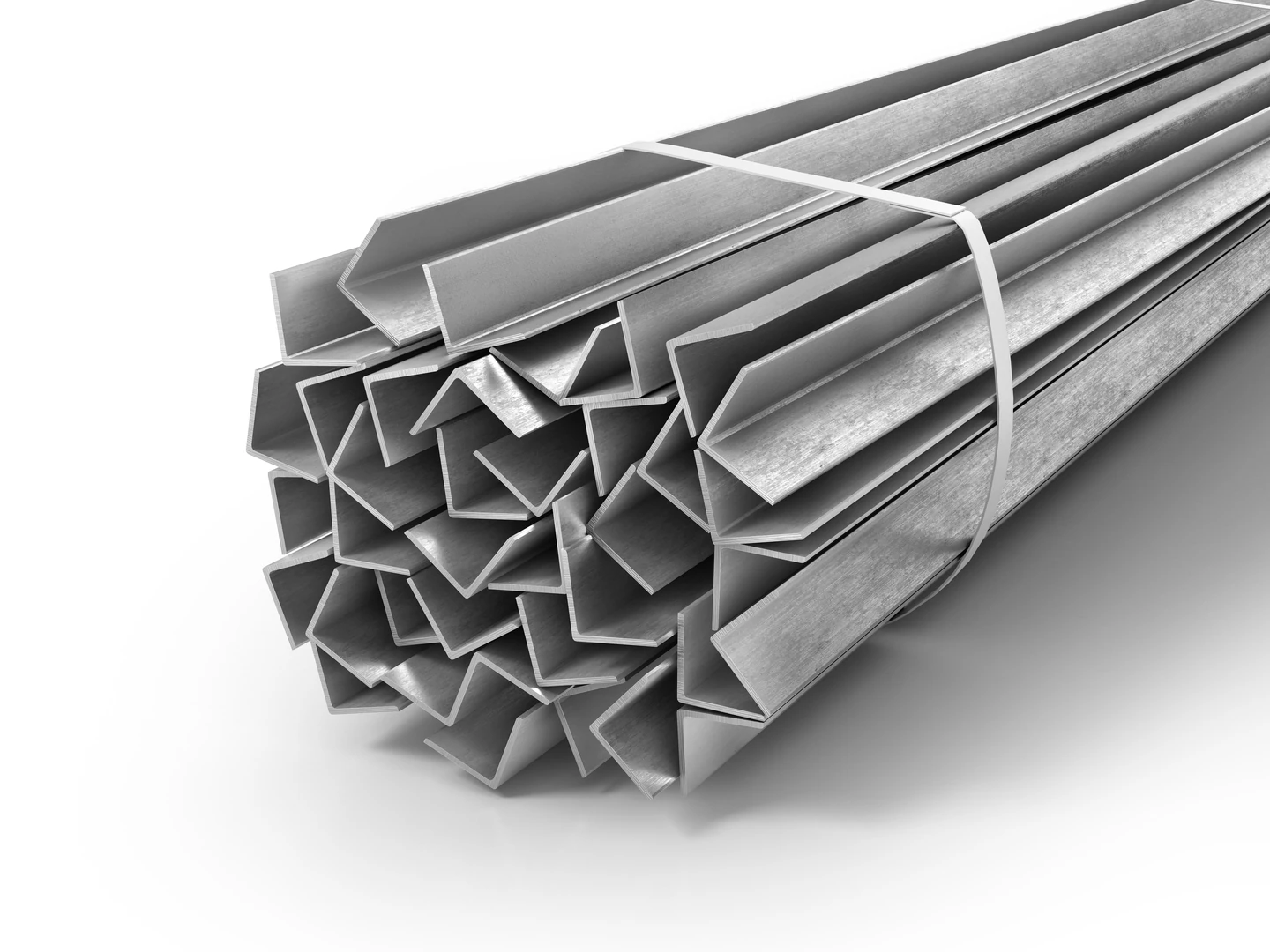
Maigaotuo’s Stainless Steel Angle Bar page establishes the relevant product direction: an L-shaped stainless steel section intended for frames, supports, brackets and structural reinforcement. It does not replace the project drawing or RFQ.
The buyer still needs to define 316 as the required grade, the exact leg dimensions, thickness, length, tolerances, surface condition, fabrication scope, inspection documents and packing requirements. If another grade or geometry is proposed, the quotation should identify that deviation explicitly.
Which Buyer Inputs Should Be Frozen Before Shortlisting a Supplier?
| Buyer Input | Why It Matters | What the Supplier Should Confirm |
|---|---|---|
| Service environment | Determines whether 316 is appropriate for the actual exposure | Offered grade and any assumptions about the application |
| Angle geometry | Controls fit, connection layout and load transfer | Equal or unequal legs and offered section dimensions |
| Leg size and thickness | Affects stiffness, connection area and fabrication | Exact offered dimensions and tolerance basis |
| Length | Affects yield, joints, handling and downstream cutting | Supply length and any length tolerance |
| Surface condition | Changes visible appearance and downstream finishing needs | As-supplied finish and included surface processing |
| Fabrication scope | Separates material-only quotes from processed-part quotes | Cutting, drilling, welding or other included work |
| Traceability and inspection | Provides evidence that delivered material matches the specification | Available material and inspection documents for the quoted scope |
The buyer shortlist should be built after these fields are aligned. A lower price is not automatically a better offer if it is based on a different section size, missing processing, weaker document scope or an unapproved material substitution.
When Does the 316 Angle Bar Decision Change?
The conclusion changes when the service environment changes, when the section becomes a primary load-bearing member rather than a secondary bracket, or when the project specification mandates a different grade or dimensional standard. It also changes when the angle is exposed as an architectural element rather than hidden inside machinery.
For chloride-rich, coastal or chemically aggressive service, the buyer should review the full corrosion environment rather than assuming that 316 is automatically adequate. Conversely, for a mild indoor application, 316 may be required by project specification even if another grade could theoretically perform. Procurement should follow the governing engineering requirement, not override it for convenience.
Build the RFQ So the Supplier Can Return a Comparable Offer
The RFQ should state the application, required 316 grade designation, equal- or unequal-leg geometry, leg dimensions, thickness, length, dimensional standard or drawing tolerance, surface condition, fabrication scope, quantity, inspection/document requirements and packing needs. If a drawing controls the part, include the current revision.
Ask the supplier to return the offered material, exact section, included processing, document scope, packing basis and all deviations. This creates a clean comparison between suppliers and prevents “316 Stainless Steel Angle Bar” from remaining only a search keyword.
Once these requirements are defined, submit the project through Maigaotuo’s inquiry form. The useful next step is to confirm that the offered angle bar matches the project environment, section geometry and evidence requirements before price becomes the deciding factor.