



The Material That Keeps Security and Structure Intact: Why 304/316 Stainless Steel Expanded Metal Mesh Is a Specification Decision, Not a Line Item
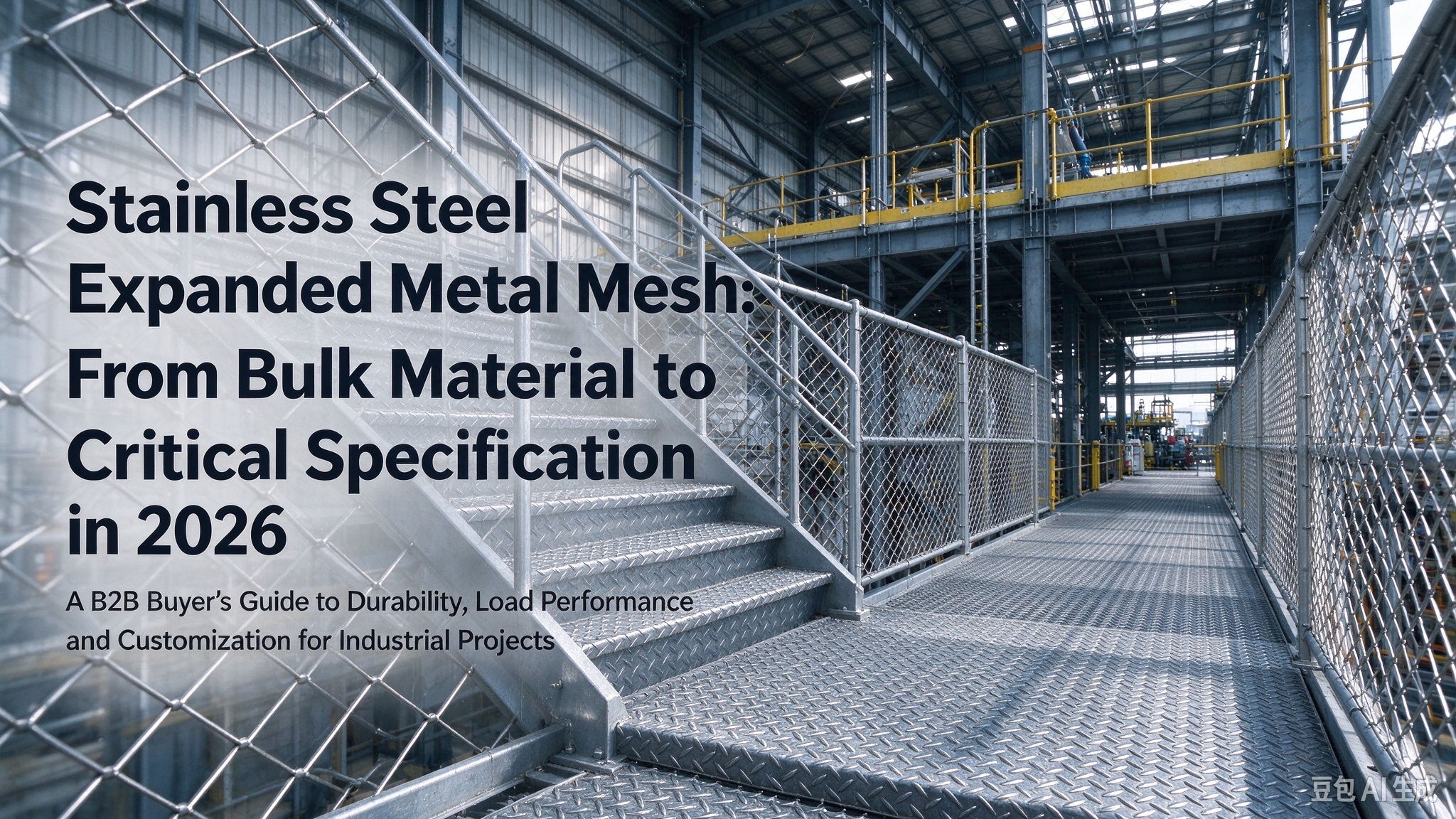
In the global procurement of metal mesh, the category of expanded metal occupies a peculiar position. It is ubiquitous—found in balustrades, facades, walkways, industrial platforms, filtration systems, and security fencing—yet it is rarely the subject of strategic sourcing conversations. That is beginning to change. As infrastructure projects tighten their durability requirements and industrial buyers confront the long-term cost of premature corrosion, the specification of stainless steel expanded metal mesh is moving from the back of the purchase order to the center of the technical discussion.
The market data reflects this shift. The global micro expanded metal mesh market alone was valued at approximately US$490 million in 2025 and is projected to reach US$743 million by 2034, growing at a compound annual growth rate of 6.2% . The broader expanded metal category is being driven by infrastructure modernization, industrial safety mandates, and a growing preference for materials that deliver structural integrity without the waste associated with perforated alternatives . For B2B buyers, the implication is straightforward: the supplier’s ability to deliver consistent material grade, precise diamond opening control, and application-specific customization is becoming as important as the quoted price per square meter.
The Material Decision: 304, 316, and the Cost of Getting It Wrong
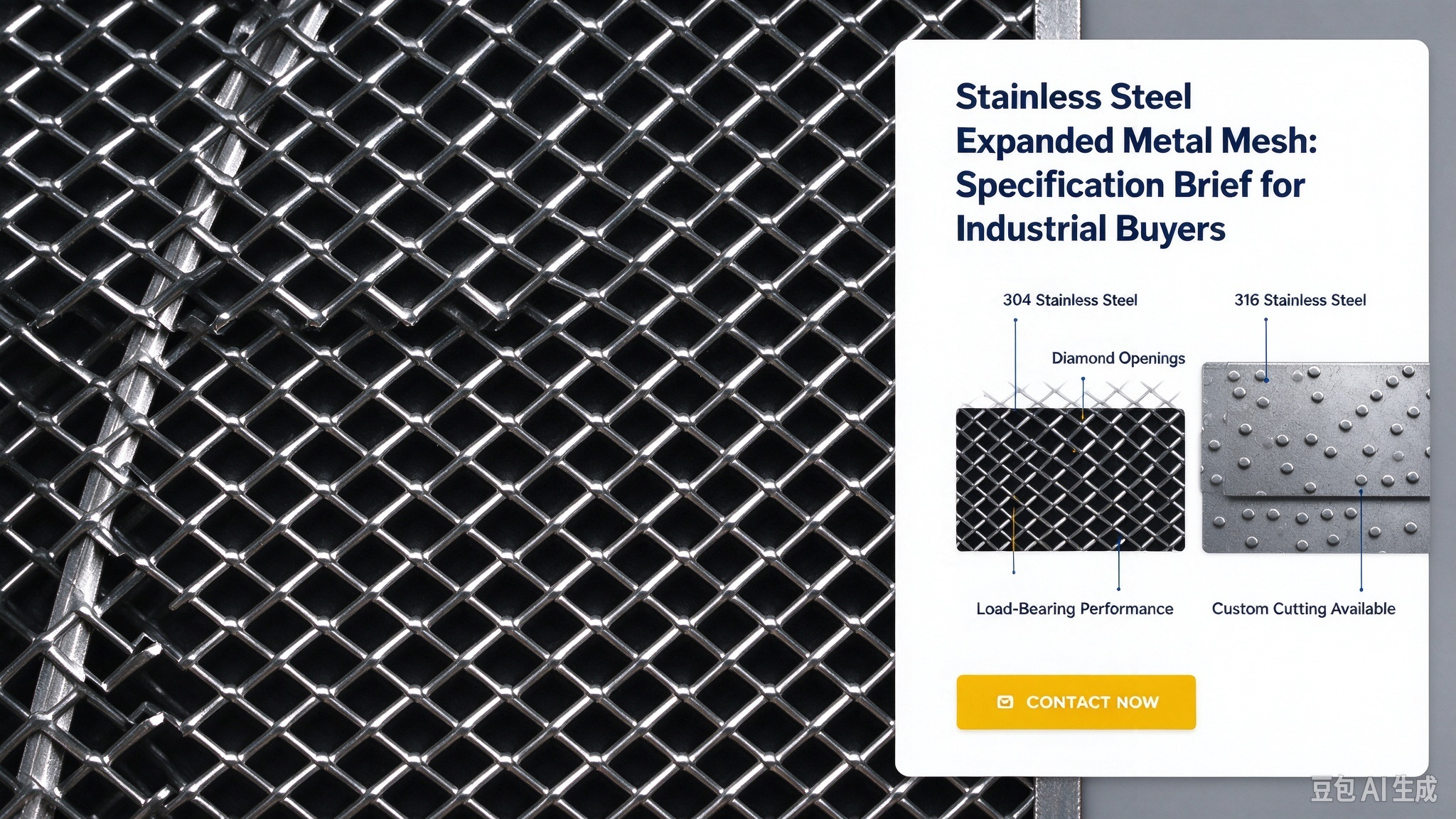
The product specification for this stainless steel expanded metal mesh lists 304 stainless steel as standard, with 316 available. That distinction deserves more attention than most procurement documents allocate.
Type 304 is the workhorse austenitic grade, offering good corrosion resistance in most atmospheric environments. Type 316 contains approximately 2–3% molybdenum, which significantly enhances resistance to chloride-induced corrosion . In environments where salt spray, industrial chemicals, or high-humidity conditions are routine—coastal infrastructure, water treatment facilities, food processing plants—the material choice determines whether the mesh performs for its intended service life or becomes a maintenance liability.
The technical literature on austenitic stainless steels is consistent on this point: while both 304 and 316 rely on a chromium-based passive oxide layer for corrosion resistance, the molybdenum addition in 316 improves pitting resistance in chloride-containing environments . For specifiers writing performance-based requirements, the material grade should be matched to the environmental exposure class of the installation, not selected by default from a catalog.
Diamond Opening and the Customization Advantage
The product’s mesh opening—small, medium, and large diamond openings with customization available—addresses a critical specification variable. Expanded metal is manufactured through a slitting and stretching process that produces no punching waste, making it inherently more material-efficient than perforated sheet . The diamond geometry, however, must be tuned to the application: smaller openings for security and filtration, larger openings for ventilation and visual permeability in architectural cladding.
The plate thickness range of 0.3–3.0 mm covers a broad spectrum of load-bearing requirements. A 0.3 mm mesh is suitable for decorative facades and lightweight screening, while a 3.0 mm plate provides the structural capacity for walkways, platforms, and industrial flooring. For buyers managing multiple product lines, the ability to source different thicknesses and opening sizes from a single supplier reduces qualification overhead and simplifies inventory management.
Application Context: Where This Mesh Performs
The specification notes corrosion resistance, ventilation, slip resistance, and durable load-bearing performance. These properties align with several high-demand application categories.
In architectural and infrastructure projects, expanded metal is increasingly specified for balustrade infill panels, facade cladding, and suspended ceiling systems, where the open mesh structure provides safety, airflow, and visual transparency while maintaining structural integrity . In industrial environments, stainless steel expanded metal serves as walkway grating, machine guarding, and filtration support, where corrosion resistance and load-bearing capacity are non-negotiable.
The common sheet sizes—1 m × 2 m and 1.2 m × 2.4 m, with cutting and processing available—support both project-based procurement and fabrication-ready supply. For contractors and fabricators, this flexibility reduces on-site waste and simplifies installation sequencing.
Conclusion: A Component That Defines Performance
Expanded metal mesh is not a headline product. It is a component that disappears into the finished structure—until it fails. For B2B buyers in 2026, the sourcing decision is not simply about finding a supplier who can deliver stainless steel mesh at a competitive price. It is about identifying a partner who understands that material grade, opening geometry, and thickness consistency determine whether the mesh meets the performance requirements of its application or becomes a recurring maintenance item.
In a market moving toward precision and durability, the specification of expanded metal mesh is a technical decision with long-term cost implications. The buyers who treat it as such will be the ones whose projects hold up.
Media Contact:
Foshan Maigaotuo Metal Technology Co., Ltd.
Email: admin@mgtsp.com
Phone: +86-18153438455 / +86-13129109999