



Steel Pipe PVoC Certification: Documents and Shipment Checks
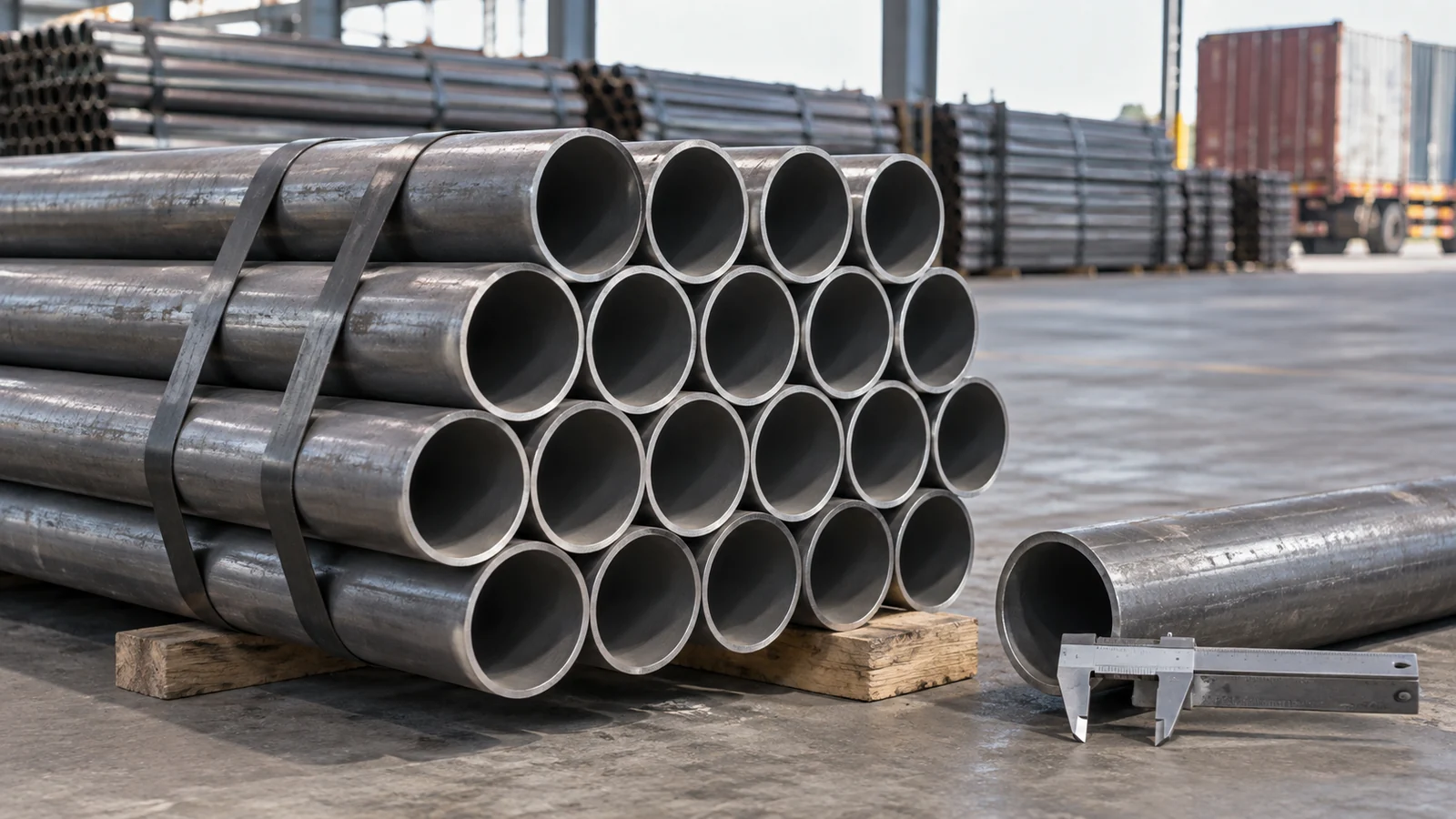
Buying steel pipe with PVoC certification means arranging the destination-specific conformity assessment and obtaining the shipment documentation required for the actual goods. It is not the same as choosing a steel grade or asking for a mill certificate. A mill test certificate supports material verification; a PVoC Certificate of Conformity addresses the applicable programme and covered consignment. For importers and project buyers, the practical task is to connect the pipe specification, test evidence, physical identification and final shipping documents before loading. Start with the destination and delivery condition, then build the evidence around the exact pipe order—not a certificate from an unrelated shipment.
Start with the Destination and the Applicable Requirements
Establish whether the shipment falls within the programme
PVoC refers to pre-export or pre-shipment verification of conformity under a destination country’s programme. It is not an international steel grade or a universal product approval. Kenya and Tanzania, for example, operate their own programmes covering regulated imports. The applicable scope, exemptions, accepted standards and authorized service providers need to be established for the intended destination.
Begin with a complete goods description rather than the words “steel pipe.” State whether the order contains welded or seamless pipe, its material, intended use and delivered condition. Give the importer or customs representative enough information to check the proposed HS classification. A code copied from an earlier invoice is not a substitute for reviewing the actual product.
A useful enquiry links the destination with the relevant steel pipe supply options. This keeps the compliance discussion attached to a defined product instead of a general request for “certified steel.”
Keep the project specification and import requirements distinct
The engineering specification and the destination’s conformity requirements answer different questions. The first defines what the project has ordered; the second establishes the basis on which the regulated goods are assessed for import. Writing an ASTM or EN reference into a purchase order does not, by itself, demonstrate that the destination accepts that specification for the intended goods.
Resolve the accepted standard and edition before commissioning additional tests. Otherwise, the order can accumulate genuine reports that do not address the required acceptance criteria. Where an international equivalent is proposed, obtain the assessment body’s acceptance of that basis rather than treating similar grade names as proof of equivalence.
MTC vs CoC for Steel Pipe Imports: Different Documents, Different Jobs
Understand what the certificate actually demonstrates
A steel pipe material test certificate (MTC) belongs to the material-evidence package. Its usefulness depends on the product identity, applicable specification and results it records. A PVoC Certificate of Conformity belongs to the destination’s conformity-assessment process. One can support the other, but they are not interchangeable.
| Document | What to examine | What it does not establish by itself |
|---|---|---|
| Mill test certificate | Material identity, standard, grade, heat or lot references, and the recorded inspection results. | Completion of the destination’s PVoC process or coverage of unrelated stock. |
| Test report | Sample identification, test method, results, acceptance basis and the products represented. | Coverage of every size, grade, manufacturing source or later shipment. |
| Inspection report | The goods examined, inspection date, scope, observations and unresolved findings. | Verification of technical characteristics outside the recorded inspection scope. |
| PVoC Certificate of Conformity | Destination programme, issuer, covered goods and referenced shipment documents. | Universal approval of the supplier’s catalogue or completion of every other import formality. |
The review should identify gaps between these documents, not simply count them. If the order contains several material batches, a report for one identified sample needs a defined basis for representing the goods presented for assessment. Adding an unrelated report makes the file larger without resolving that coverage question.
Registration is not the same as a shipment CoC
Some programmes provide different assessment routes for occasional and regular exporters. In Tanzania’s published route structure, product registration or licensing can change how assessment is organized, but CoC issuance remains a separate step. A registration document should therefore not be presented as automatic shipment clearance. Its role must be read within the applicable programme.
The practical question for a repeat order is whether the current goods, manufacturer, specification and delivery condition fall within the relevant document scope. Familiarity with the supplier does not answer that question.
Connect the Pipe Specification to the Actual Shipment
Define the manufacturing route and delivered condition
A usable steel pipe specification identifies the manufacturing route, product standard and edition, material grade, dimensions, length, end preparation and surface condition. Record dimensions with their units and agreed tolerances, not only a nominal size or a broad catalogue range. An assessor and a warehouse team need to recognize the same product from the order description.
For example, Maigaotuo’s straight-seam steel pipe page lists cut-to-length, threading and beveling options, together with different surface finishes. These options describe possible supply configurations; the purchase order still needs to identify which configuration is actually being supplied. A plain-end black pipe and a threaded, galvanized delivery should not share an ambiguous final goods description.
This matters because material evidence and final-product evidence are not always the same. A base-material record does not, by itself, document work carried out later. The assessment package should reflect the finished condition required by the order.
Keep material identity visible through packing
Use an order-line reconciliation record to connect the specification, relevant material records, pipe or bundle identification, and final packing-list entry. Where heat or lot traceability is required, preserve that connection through cutting, sorting and repacking. The record should also reconcile the quantity in the unit used by the order—pieces, length or weight—rather than rely on a total bundle count alone.
Consider a planned shipment containing two material batches of the same pipe size. If they are mixed during packing, a photograph of the bundle ends may confirm the apparent size but not which material record covers each group. Keep the batches distinguishable, or maintain a documented mapping that allows the inspection team to identify them.
Not every supporting detail has to appear on the face of the CoC. What matters is that the certificate’s goods description and referenced documents identify the assessed consignment adequately under the programme’s requirements. Do not demand an invented certificate format; build a usable relationship between the documents and goods.
Plan Steel Pipe Pre-Shipment Inspection Around the Finished Goods
Separate document review, inspection and testing
PVoC assessment can involve documentary review, physical inspection and testing, with other activities where the programme requires them. These activities address different evidence gaps. Reading a report checks what it records; identifying the available goods checks what is being presented; a test measures the characteristic covered by its method.
The steel pipe NDT inspection report is a useful example. Where nondestructive testing is required, examine the method, inspected extent, acceptance criteria, results and pipe or batch references. The presence of the letters “NDT” does not establish that the required inspection was performed on the material being shipped. Equally, an NDT record does not replace a chemical or mechanical test when that separate result is required.
Agree the accepted laboratory evidence, sampling basis and inspection arrangements with the appointed assessment body before ordering duplicate work. Chemical analysis, mechanical testing, dimensional checks, weld inspection or hydrostatic testing may be relevant to a particular specification; they should not be presented as one mandatory test package for every PVoC steel pipe order.
Account for processing and mixed consignments
For an order of internally and externally coated spiral steel pipe, separate the base-pipe evidence from records concerning the specified coating and final delivery condition. The point is not to add every possible coating test, but to identify requirements that a base-pipe MTC does not address.
Processing also affects inspection readiness. Presenting unfinished goods for a review intended to cover the final order can leave later work outside the recorded observations. Agree when the goods must be ready, what remains accessible after packing, and which records will identify the material inspected. Keep different specifications and batches clearly separated where their evidence or inspection scope differs.
Resolve Shipment Changes Before Loading
Match the certificate to the final consignment
Before loading, compare the issued CoC and its referenced documents with the final commercial and packing records. Check the destination, parties, product description, quantities, document references and any conditions relevant to the shipment. A certificate can be genuine yet still refer to different goods.
Use the issuer’s or competent authority’s verification channel to check certificate authenticity and status. Reviewing the appearance of a scanned certificate is not the same task as verifying its record. Keep the issued version under document control; discrepancies should go back to the responsible issuer rather than be “fixed” by editing the certificate locally.
Refer substitutions and split shipments for reassessment
A change after inspection is a reason to review coverage. Replacing material with another heat, adding a specification, changing the coating, revising quantity or splitting a planned consignment can alter the relationship between the application, assessed goods and final shipment.
The purchasing team should describe the change and identify the affected order lines. The assessment body then determines whether the existing evidence remains acceptable and whether revised documentation or further assessment is needed. Do not assume that every change automatically cancels a certificate, or that an unchanged total weight makes a substitution irrelevant.
A multiple-shipment application arrangement, where available, is also not proof that the same issued CoC may be reused without restriction. Application handling and certificate coverage are different matters. Establish the permitted arrangement before dividing an order into separate departures.
A CoC does not settle every customs or project-acceptance requirement. Keep other applicable import formalities and the buyer’s contractual acceptance process separate. Certification should form part of shipment preparation, not be advertised as a guarantee of unrestricted clearance.
Define PVoC Responsibilities in the Steel Pipe RFQ
Prepare the documents required for steel pipe PVoC assessment
A request for quotation should give the supply and assessment teams the same starting information. Explain the destination, intended use, pipe schedule, quantity, delivered condition and shipment plan. State which party will coordinate the assessment application and who is responsible for the associated charges.
The exact application dossier depends on the destination and assessment route. Prepare the relevant technical data and available material or test evidence alongside the commercial documents requested by the appointed body. If a final document will only exist later in the shipping process, agree how its reference or replacement version will be supplied. Do not fabricate a shipping reference merely to complete a draft application.
| RFQ item | Details to provide | Why it changes the decision |
|---|---|---|
| Destination and importer | Import market, receiving party, intended use and available classification information. | Establishes which programme and accepted requirements need to be reviewed. |
| Pipe schedule | Manufacturing route, standard, grade, dimensions, quantity and delivery condition for each line. | Defines the goods and the evidence needed to distinguish different specifications. |
| Assessment arrangements | Appointed body, available reports, inspection location and goods-ready date. | Helps identify missing evidence and coordinate access to the relevant goods. |
| Processing and packing | Cutting, end preparation, coating, identification and packing requirements. | Clarifies the final condition and how traceability will be retained. |
| Shipment and responsibility | Single or split shipment, document coordinator, payer and agreed change-notification process. | Separates supply obligations from assessment, document and transport responsibilities. |
Compare complete quotation scopes, not just a price per tonne
Ask for product supply and processing, inspection or testing, document coordination, packing and logistics to be distinguished in the quotation. Any assessment-body fees or possible additional work should have a stated responsibility rather than disappear inside the phrase “PVoC included.” No universal fee or processing time can be inferred from the steel pipe description alone.
For example, one offer may include access for inspection while another also includes preparation of traceable packing records and specified testing. The price difference cannot be evaluated fairly until those scopes are aligned. Record what is included, what is optional and what the importer will arrange separately.
Maigaotuo / MGTSP supplies steel products and supports processing, inspection-document and export coordination. For a destination-specific order, use the steel pipe project enquiry form to share the pipe schedule, destination, quantity, delivery condition and required documents. Define the supply and coordination scope before committing to the shipment plan; the authorized assessment body remains responsible for the applicable conformity decision and certificate issuance.